
Last Updated: November 13, 2026
Quick Summary
To learn how to value a muscle car for insurance, build a documented case from your car’s year, make, model and trim, condition, originality, matching numbers, rarity and provenance, then confirm a range using price guides and recent comparable sales. Insurers set an agreed value from that evidence, so gather photos, records and receipts before you call.
- Matching numbers means the engine and transmission still carry the factory identifiers the car was built with.
- Use online price guides only to build a range, then confirm it with your own records.
- A professional appraisal makes sense for high-value, heavily modified, freshly restored or hard-to-compare cars.
- Agreed value is locked in at policy start and paid on a total loss with no depreciation applied.
- Your valuation file should include title, photos, restoration receipts, any appraisal and recent comparable sales.
Table of Contents
- Why Muscle Car Insurance Valuation Starts With Evidence, Not Guesswork
- The Factors That Set Muscle Car Value
- How to Value a Muscle Car for Insurance Online
- What Hagerty Classic Car Values and Price Guides Can and Cannot Tell You
- When a Muscle Car Insurance Appraisal Makes Sense
- How Classic Car Insurance Agreed Value Protects a Total-Loss Payout
- Building Your Valuation File Before You Call United Family Insurance
- Frequently Asked Questions
Why Muscle Car Insurance Valuation Starts With Evidence, Not Guesswork
If you own a classic muscle car, you already know its value goes beyond a simple book figure. Before investing effort in valuation, you may want to know whether classic car insurance is worth it for muscle cars. Learning how to value a muscle car for insurance means building a case the insurer can accept, not just picking a number that feels right.
Muscle car insurance valuation is the process of establishing a documented, defensible dollar value for a collector vehicle so an insurer can set an agreed limit on the policy. That value has to rest on evidence: the car’s year, make, model and trim, its condition, its originality and its history.
The stakes are real. If you guess and the car is totaled, the payout may fall well short of what it would cost to replace, so the work you do before the policy starts matters.
Below, we walk through the factors, the tools, the appraisal question and the file you should build. American Collectors’ guide to determining classic car value makes the same point: a real value comes from vehicle-specific details, not a generic figure.
The Factors That Set Muscle Car Value
No single factor decides value. Insurers weigh several together, and a weak spot in one area can pull the whole number down. Here is what matters most.
Year, Make, Model, and Trim
Start with the basics. A car’s year, make, model and trim level set its baseline. Two cars that look alike can book very differently because one left the factory with a bigger engine or a limited-edition package.
Factory options count too. A four-speed manual, a specific rear axle ratio or a rare paint code can move value up or down. Gather the original build details before you talk numbers.
Condition, Originality, and Matching Numbers
Condition is graded on a scale, from show-quality to driver-quality to project car. Be honest about where yours sits.
Matching numbers means the engine, transmission and other key parts still carry the factory identifiers the car was built with. A matching-numbers car usually holds more value than a modified one. Originality matters for the same reason.
Rarity, Production Numbers, and Provenance
Rarity drives demand. A low production number, a one-year-only engine or a documented special order can lift a muscle car above its peers.
Provenance is the paper trail: title history, prior owners, and records that prove the car is what it claims to be. Documentation turns a claim into evidence.
How to Value a Muscle Car for Insurance Online
Online tools give you a starting point, and that is all they are. To value a muscle car for insurance online, use price guides and valuation tools to build a range, then confirm it with your own records. Never treat a single online number as final.
Muscle cars are harder to value online than generic classics because so much of the value sits in codes and options that a listing rarely shows. Two 1969 models that look identical in photos can differ by tens of thousands of dollars depending on the engine code, the transmission, the rear axle, and whether the drivetrain is original. Online tools cannot see those details. You have to supply them.
Here is a practical workflow for a Las Vegas owner:
- Write down the full year, make, model and trim
- Decode the VIN and, where available, the trim tag or fender tag to confirm the original engine, transmission and axle
- List factory options and any matching-numbers parts
- Grade the condition honestly
- Pull a range from a valuation tool
- Gather recent comparable sales, starting with regional and national auction results if local Las Vegas sales are scarce
- Photograph the car inside and out, including the VIN plate, trim tag, engine stamp and odometer
- Collect receipts and maintenance records
That checklist is your working file. Each item backs up the number you eventually agree on.
When local comparable sales are scarce. A specific muscle car, a particular engine code, a rare color, a documented special order, may not have sold locally in the past year. Do not force a weak local comparable. Instead, build a regional and national evidence set: recent auction results, dealer listings for the same specification, and private-sale records where you can verify them.
Watch out: relying on a single online number, or on asking prices rather than completed sales, is the most common way owners arrive at a value their insurer will not accept.
What Hagerty Classic Car Values and Price Guides Can and Cannot Tell You
Hagerty classic car values and similar price guides are useful references, but they are not appraisals. They show what similar cars have sold for or are listed at, which helps you set a range.
What they cannot do is judge your specific car. Hemmings’ price guide reports high, low and average asking prices from advertisements over a set period. Asking prices are not the same as final sale prices, and neither one accounts for your car’s exact condition or history.
Use the guides to sense-check your range. Then rely on your documentation to support the actual figure.
When a Muscle Car Insurance Appraisal Makes Sense
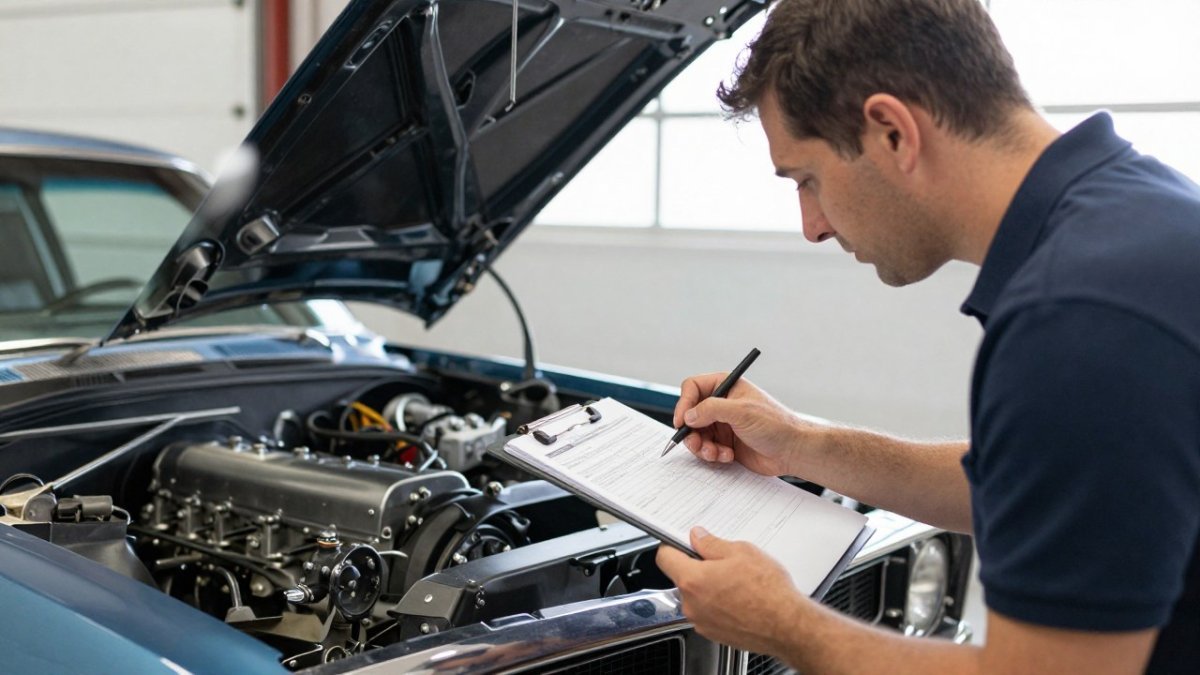
An appraisal makes sense when the car is high-value, heavily modified, freshly restored, or hard to compare to others. A professional appraiser inspects the car in person and produces a written value you can hand to your insurer.
For a rare or one-off build, an appraisal removes guesswork. It also helps if local comparable sales are scarce, which can happen with unusual muscle cars. If you plan to take the car to track events, review how track use affects coverage before you finalize a value.
Watch out: skipping an appraisal on a high-value or heavily modified car can leave you underinsured if a total loss occurs.
How Classic Car Insurance Agreed Value Protects a Total-Loss Payout
Agreed value is a value you and the insurer lock in at the start of the policy. If the car is totaled, you receive that agreed amount, with no depreciation applied. Chubb’s explanation of agreed value coverage describes it the same way: a figure set at policy start and paid without depreciation.
This is different from actual cash value, which pays what the car is worth at the time of loss, after depreciation. It also differs from stated value, where the payout can be capped below the stated figure. To see how agreed value compares with a standard auto policy, read classic car insurance vs standard auto insurance.
Agreed value turns your valuation work into a guaranteed payout ceiling. That is why the number you agree on matters so much. But the limit is only one part of the total-loss payout. Before you choose a number, confirm these policy details with your agent:
- Deductible. A deductible reduces the settlement. Ask whether it applies to a total loss and how it is calculated.
- Exclusions. Track use, commercial use, unapproved drivers and certain modifications can be excluded. If you plan to take the car to track events, review how track use affects coverage before you finalize a value.
- Settlement terms. Confirm whether the policy pays the agreed amount or the agreed amount less deductible, and whether taxes and fees are included.
- Salvage. Ask who keeps the salvage after a total loss and whether that affects the payout.
- Value review. Confirm how often the agreed value can be revised and what evidence the insurer requires for an increase.
Updating the value after restoration or market changes. An agreed value is not permanent. After a restoration, a significant upgrade, or a sustained market move, request a revised agreed value and submit the evidence: restoration receipts, photos, an updated appraisal, and recent comparable sales. Insurers will often adjust the limit when the documentation supports it. Waiting until renewal, or until after a loss, is the wrong time to discover the limit is stale.
Nevada note. Confirm with your agent that the policy satisfies Nevada’s minimum liability requirements and that the agreed value reflects current local market conditions.
Watch out: choosing the lowest premium without confirming the deductible, exclusions and settlement terms can leave you with an agreed value that looks right on paper but pays far less at claim time.
Building Your Valuation File Before You Call United Family Insurance
A strong valuation file does most of the work for you. Before you call, gather your documents and photos in one place. For a wider walkthrough, see our guide to insuring a classic car, and if budget is a concern, read how to find affordable classic car insurance.
Your file should include:
- Title and registration
- Photos of the body, engine bay, interior and odometer
- Restoration receipts and maintenance records
- Any appraisal report
- Recent comparable sales you found
- A list of factory options and matching-numbers parts
With that file ready, our agents can compare the market on your behalf and help you set a fair agreed value. We do the shopping so you save time and hassle.
Valuing a muscle car for insurance takes a little work up front, but it protects you when it counts. United Family Insurance compares multiple carriers for you, gives you expert advice from real agents, and makes filing a claim simple. Get started with United Family Insurance and lock in coverage that matches your car’s true worth.
Frequently Asked Questions
Do insurance companies use agreed value for classic muscle cars?
Many collector-vehicle policies use agreed value, which locks in the car’s worth at the start of the policy so the payout is not reduced by depreciation. Chubb describes agreed value as a figure set when coverage begins. Not every policy works this way, so read the loss-settlement section before signing. Ask your agent to confirm in writing whether the policy uses agreed value or actual cash value, because that single term decides what you collect after a total loss.
Can you use Hagerty or NADA values to insure a muscle car?
Hagerty’s valuation tool and Hemmings price guides are useful starting points, but they are not proof of your car’s value. Hemmings reports asking prices from advertisements, which reflect what sellers want, not what buyers paid. American Collectors notes that valuation depends on year, make, model, trim, and factory options. Bring guide results to your agent as supporting evidence, then back them with recent comparable sales and documentation for your specific car.
How do you document modifications and restoration work for an insurance appraisal?
Keep restoration receipts, parts invoices, maintenance records, and dated photographs of the work as it progressed. Photograph the engine bay, trim tags, and any stampings that verify originality. For a muscle car insurance appraisal, an appraiser will want to see what changed from factory spec and what it cost. Organized records support a higher agreed value and speed up a claim. Store digital copies as well as paper files so nothing is lost if the car is damaged.
What should you do if an insurer’s valuation is lower than your muscle car’s value?
Ask how the figure was calculated and which comparables were used. Supply your own evidence: recent sales of similar cars, an independent appraisal, restoration receipts, and documentation of rare factory options. American Collectors notes that market value reflects supply and demand, historical sale prices, and current asking prices, so a well-documented case can move the number. If the gap remains, compare agreed value terms from other carriers before you commit.
