
Table of Contents
- What Is Classic Car Insurance and How It Works
- Agreed Value vs. Actual Cash Value Coverage
- How to Qualify for Collector Car Insurance
- Classic Car Insurance Mileage Restrictions and Usage Limits
- Cost Savings and Premium Comparisons for Muscle Cars
- Storage, Maintenance, and Vehicle Modification Considerations
- Is Classic Car Insurance Worth It? Making the Decision
- Conclusion
Last Updated: August 22, 2026
What Is Classic Car Insurance and How It Works
Classic car insurance is specialized coverage for vehicles with historical, cultural, or collector value. Unlike standard auto policies that depreciate your vehicle annually, classic car insurance recognizes that many collector vehicles appreciate over time or maintain stable values.
Classic car policies use an agreed-upon value that you and the insurer establish upfront, protecting your investment against market fluctuations. If your muscle car is damaged or totaled, you receive that predetermined amount rather than whatever a claims adjuster calculates on the spot. This eliminates uncertainty and potential disputes that plague standard claims for high-value vehicles.
Most classic car policies include specialized coverage options tailored to collector vehicles: roadside assistance, spare parts coverage, and coverage for custom modifications. For owners who invest significantly in their muscle cars, these tailored protections address real gaps in conventional policies.
Eligibility typically requires that your vehicle be at least 15-25 years old, in good condition, and not used as a daily driver (naic.org). Usage restrictions exist because classic car insurance assumes limited annual mileage, usually capped at 2,500 to 5,000 miles per year, which dramatically reduces risk and justifies lower premiums (iii.org).
Agreed Value vs. Actual Cash Value Coverage
Understanding the difference between agreed value and actual cash value is the single most important decision when evaluating classic car insurance for muscle cars.
Agreed value means you and your insurer settle on a specific dollar amount before any claim occurs. You provide documentation, appraisals, photos, and maintenance records. Once both parties sign off, that value is locked in. If your 1969 Chevelle SS is totaled, you receive exactly what you agreed to, regardless of market conditions.
Actual cash value (ACV) is what most standard auto policies use. The insurer determines your vehicle’s value at the time of loss by consulting market data and depreciation tables. For a muscle car, this often means a significant shortfall. A car you spent $40,000 restoring might be valued at $28,000 under ACV because the insurer’s valuation method doesn’t account for your specific improvements.
For vehicles that have appreciated, which many muscle cars do, agreed value is almost always superior. The trade-off is that you’ll need documentation to support the agreed value. Most insurers require a professional appraisal, typically costing $200-$500, but this investment pays for itself immediately if you ever file a claim.
One critical caveat: agreed value only protects you up to the amount you agreed to. If you undervalue your vehicle, you’re still underprotected. Professional appraisals establish realistic values based on comparable sales, condition, modifications, and market trends.
How to Qualify for Collector Car Insurance
Qualifying for classic car insurance requires meeting specific criteria. Your vehicle must typically be at least 15 years old, in good condition, well-maintained, and in good working order.
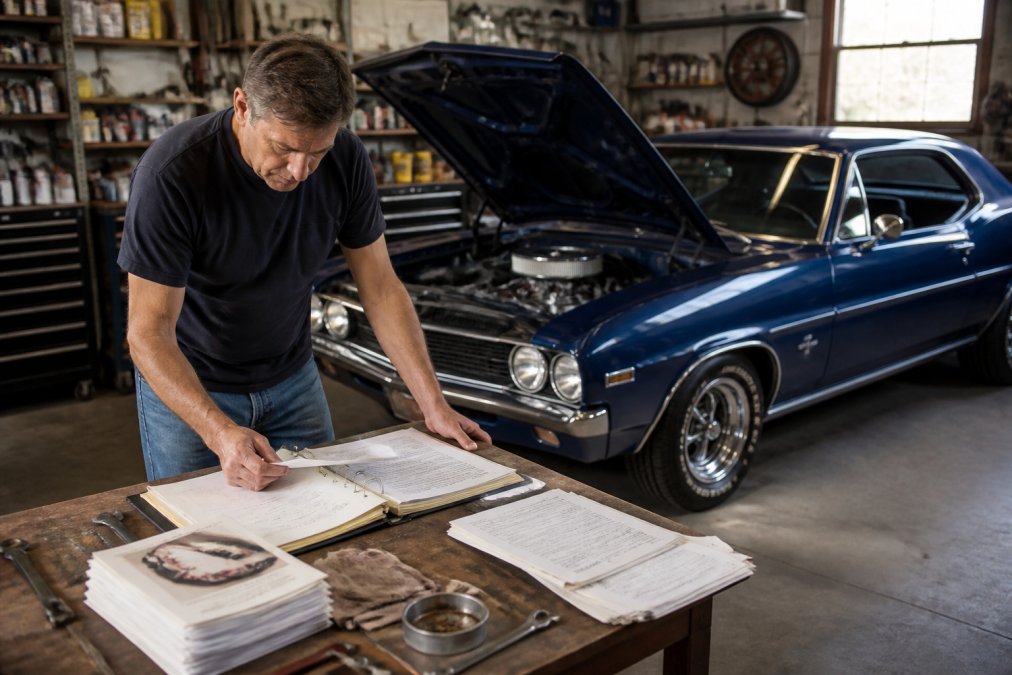
Documentation is where most of the qualification process happens. You’ll need to provide proof of the vehicle’s value through a professional appraisal. The appraiser evaluates the vehicle’s condition, originality, comparable sales data, and market trends. For muscle cars specifically, appraisers assess whether the vehicle retains original parts, has undergone restoration, or features aftermarket modifications.
Many insurers require that you own a primary vehicle for daily transportation. This requirement exists because classic car policies assume limited use. Your driving record matters, though insurers are generally more lenient with collector vehicle policies than standard auto insurance.
Storage requirements factor into qualification as well. Your muscle car should be garaged or stored in a secure location. Some insurers have specific requirements about garage security, climate control, or alarm systems.
Professional appraisals work for most vehicles. A professional appraisal, conducted by a certified appraiser, carries more weight and is often required for vehicles valued above $25,000 or those with significant modifications. United Family Insurance agents can guide you through the appraisal process and explain what documentation your chosen insurer requires.
Classic Car Insurance Mileage Restrictions and Usage Limits
Mileage restrictions are the defining constraint of classic car insurance. Most policies cap annual mileage at 2,500 to 5,000 miles per year, though some insurers allow up to 7,500 miles. If you exceed your policy’s mileage limit, your coverage becomes void.
This limitation exists because lower mileage means lower risk. A vehicle driven 3,000 miles annually has far fewer opportunities to be involved in an accident than a daily driver. The reduced exposure justifies significantly lower premiums.
For muscle car owners, this mileage cap requires honest self-assessment. If you’re planning to drive your Charger to car shows and take weekend cruises, you’re likely looking at 4,000-6,000 miles annually. If you’re driving it once or twice a year for special occasions, 2,500 miles is realistic.
Many insurers allow you to adjust your mileage limit if your circumstances change. The premium adjustment is usually modest, but it keeps you compliant and protected.
Some policies include "driving to and from car shows" clauses that don’t count toward your annual mileage limit. This is a valuable feature for serious collectors who attend events regularly.
Your vehicle should be garaged when not in use. Some insurers require that you use the vehicle only for pleasure driving, car shows, and exhibitions, not for any commercial purpose or regular commuting.
Cost Savings and Premium Comparisons for Muscle Cars
Classic car insurance typically costs significantly less than standard auto insurance for the same vehicle. For a 1970 Dodge Charger valued at $40,000, standard auto insurance might cost $1,200-$1,800 annually (iii.org). The same vehicle under a classic car policy could cost $400-$700 annually, less than half the standard rate.
The specific premium depends on several factors: the vehicle’s agreed-upon value, your age and driving record, whether you bundle the policy with homeowners or other insurance, and your location. Younger owners typically pay slightly higher premiums than older collectors, though the difference is smaller than with standard auto insurance.
Bundling amplifies savings. If you insure your home, primary vehicle, and classic cars all with the same company, you unlock additional discounts that can reduce your overall insurance costs by 15-25%. United Family Insurance specializes in bundling coverage across multiple policies and vehicles.
One often-overlooked cost factor is the appraisal fee. Professional appraisals typically cost $200-$500 upfront, but this is a one-time expense. Many insurers waive or subsidize appraisal costs for policyholders.
Deductible selection also affects premiums. Classic car policies often allow you to choose higher deductibles, $500, $750, or $1,000. Selecting a higher deductible can reduce your annual premium by 10-20%.
Storage, Maintenance, and Vehicle Modification Considerations
How you store and maintain your muscle car directly impacts your insurance eligibility and premium. Most insurers require that your vehicle be garaged or stored in a secure, enclosed location when not in use.
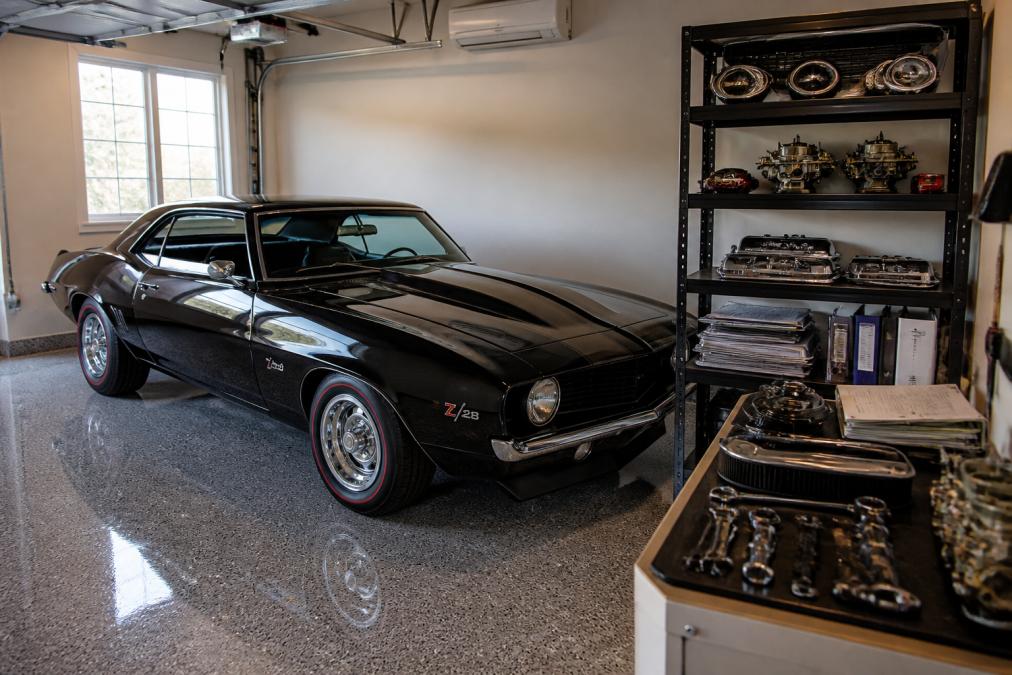
Climate-controlled storage is ideal but not always required. A standard garage that protects against weather and provides security is typically sufficient. Some insurers have specific requirements about alarm systems, locks, or security cameras for vehicles valued above $30,000.
Maintenance documentation becomes critical when you file a claim or renew your policy. Keep records of all maintenance, repairs, and restoration work. These records demonstrate that you’re actively caring for the vehicle and support your agreed-upon value.
Vehicle modifications require disclosure to your insurer. Modifications that enhance safety or performance, such as upgraded brakes or suspension, are generally viewed favorably. Custom paint jobs, interior upgrades, or modern audio systems typically don’t create problems. However, engine modifications that significantly increase horsepower or extensive frame modifications require disclosure and may affect your premium.
The key is transparency. Disclose all modifications during the application process. Hiding modifications could void your coverage if a claim occurs. Professional appraisers account for modifications in their valuations, so your agreed-upon value should reflect the vehicle’s actual condition and upgrades.
If you’re planning restoration work or upgrades, complete them before applying for insurance. Once you have an agreed-upon value locked in, minor future modifications typically don’t require policy changes. Major modifications warrant notifying your insurer and potentially updating your agreed-upon value.
Is Classic Car Insurance Worth It? Making the Decision
Whether classic car insurance is worth it for muscle cars depends on three specific factors: your vehicle’s value, how frequently you drive it, and your risk tolerance.
The clearest case for switching to classic car insurance is when your muscle car is worth more than $15,000. The premium savings alone, often 50-60% compared to standard coverage, justify the switch. Over five years, you could save $5,000-$8,000 in premiums while gaining superior coverage.
The mileage restriction is the critical constraint. If you drive your muscle car fewer than 5,000 miles annually, classic car insurance is almost certainly worth it. If you’re driving 10,000+ miles annually, standard auto insurance is likely more appropriate.
Consider your vehicle’s appreciation trajectory. Many classic muscle cars appreciate 3-5% annually or hold their value steadily. Standard auto insurance depreciates your vehicle’s value by 15-20% in the first year alone. If your vehicle is appreciating, agreed-value classic car insurance protects that appreciation.
Standard insurance claims for high-value vehicles often involve disputes over valuation. With classic car insurance, you’ve already settled the value. Claims are faster, simpler, and less adversarial.
One scenario where classic car insurance isn’t ideal: if you’re actively restoring your vehicle and it’s not yet roadworthy. During restoration, you need different coverage, often a "builder’s risk" or restoration coverage. Once restoration is complete and the vehicle is roadworthy and stored properly, classic car insurance becomes appropriate.
For owners managing multiple vehicles, classic car insurance becomes even more valuable. If you own three or four muscle cars, insuring them all under collector policies while maintaining standard coverage on your daily driver creates significant savings. United Family Insurance agents can help you structure a multi-vehicle strategy that maximizes savings and ensures comprehensive protection across all your vehicles.
Protecting a valuable muscle car requires insurance that understands collector vehicles. Standard policies undervalue your investment and leave gaps in coverage for modifications and specialized needs. Classic car insurance fills these gaps with agreed-value protection, specialized coverage options, and premiums that reflect the actual risk profile of limited-use, well-maintained vehicles. United Family Insurance can compare collector car policies from multiple carriers, ensuring you get the coverage that matches your specific vehicle, usage patterns, and budget. Get a quote today and discover how much you could save while gaining the protection your muscle car deserves.
Frequently Asked Questions
How old does a muscle car need to be to qualify for classic car insurance?
Most insurers define a classic or collector car as a vehicle at least 15-25 years old, though some policies cover vehicles as young as 10 years. Muscle cars from the 1960s and 1970s typically qualify without question. Eligibility depends on the insurer's specific guidelines and your vehicle's condition and usage patterns. Contact an agent to confirm your muscle car meets the age and condition requirements for classic car insurance.
What is the difference between agreed value and actual cash value coverage for muscle cars?
Agreed value coverage sets a fixed payout amount upfront that you and your insurer agree upon, protecting against depreciation if your muscle car is totaled. Actual cash value coverage pays only what your vehicle is worth at the time of loss, which may be less than you expect. For appreciating muscle cars, agreed value is typically better because it guarantees you receive the amount you both agreed the car is worth, regardless of market fluctuations.
Can I use my muscle car as a daily driver with classic car insurance?
Most classic car insurance policies restrict daily use and impose mileage limits, typically 2,500 to 5,000 miles annually. These policies are designed for weekend and show use, not commuting. If you plan to drive your muscle car regularly, standard auto insurance may be more appropriate. Some insurers offer limited-use or occasional-driver coverage as a middle ground, but confirm the usage restrictions with your agent before purchasing.
Does classic car insurance cost less than standard auto insurance for muscle cars?
Yes, classic car insurance typically costs significantly less than standard auto insurance because vehicles are driven less frequently and are usually well-maintained. Premiums depend on agreed value, mileage limits, storage conditions, and your driving history. Many muscle car owners see substantial savings by switching to specialized collector coverage. Get a quote from an agent to compare your specific situation and see realistic savings for your vehicle.