

Last Updated: November 8, 2026
Quick Summary
To handle a commercial property damage claim, secure the property and address safety hazards first, then photograph and inventory all damage before cleanup. Notify your carrier and broker promptly, make only temporary repairs, and document lost income for business interruption.
- Shut off gas, water, and power at the main if damage involves those systems.
- Photograph hazards and damage before fixing or cleaning anything up.
- Ask for a claim number and your assigned adjuster’s name when you report the loss.
- Keep receipts for emergency repairs like tarps, boarding up, and water pumping.
- Do not sign a release while a supplement or appraisal is still pending.
Table of Contents
- Step 1: Secure the Property and Address Safety Hazards
- Step 2: Build Your Commercial Property Damage Claim Documentation
- Step 3: Notify Your Insurance Carrier and Broker Promptly
- Step 4: Understand Your Commercial Property Insurance Claim Timeline
- Step 5: File a Business Interruption Insurance Claim for Lost Income
- Step 6: Make Temporary Repairs Without Jeopardizing Coverage
- How to Settle a Commercial Property Insurance Claim Without Leaving Money Behind
- Get Your Claim Reviewed Before You Sign Anything
- Frequently Asked Questions
Step 1: Secure the Property and Address Safety Hazards
A commercial property damage claim begins long before you call anyone. It starts with safety. Your first job after a loss is to protect people, then protect the building from getting worse.
Start with these basics:
- Get everyone out of the damaged area and call 911 if anyone is hurt.
- Shut off gas, water, and power at the main if the damage involves those systems.
- Call the fire department if you see smoke, sparks, or a gas smell.
- Block off unsafe areas with tape, cones, or a locked door.
- Photograph the hazard before you fix it.
Las Vegas heat adds a twist. A roof leak at noon can turn a ceiling into a wet, heavy mess by evening.
Do not let employees or customers walk through a damaged space to “grab a few things.” One slip on a wet floor creates a second claim, and that one lands on you. Secure the property first.
Step 2: Build Your Commercial Property Damage Claim Documentation
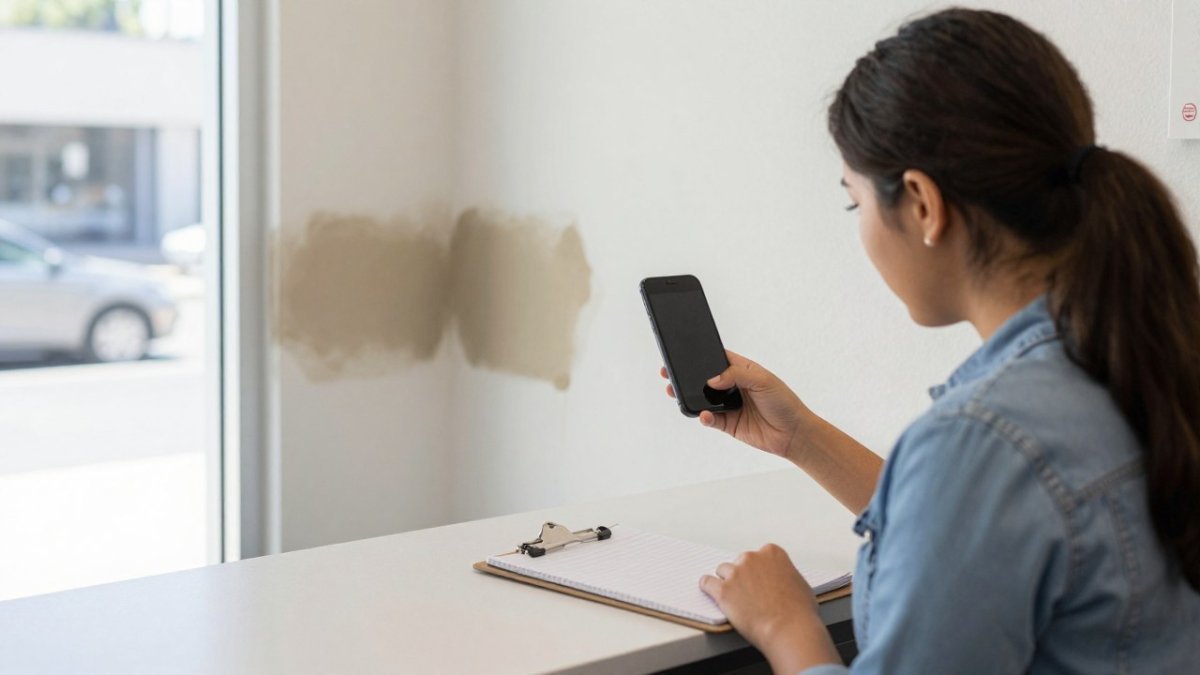
Strong documentation is the backbone of a commercial property damage claim. Photographs, video, and a written inventory do more to protect your payout than almost anything else you will do. Adjusters pay for what they can see and verify, not for what you remember.
Photographs, Video, and Before-and-After Records
Shoot wide shots first, then close-ups. Get the whole room, then the damaged corner, then the stain on the ceiling tile. Take video and walk slowly, narrating what you see.
The common mistake is cleaning up before documenting. Move damaged items only after you have recorded where they sat. If you must toss something spoiled, photograph it first, then keep a sample or the receipt.
For a deeper walkthrough of this step, our guide on how to document property damage for insurance claim covers the records adjusters expect.
A Scenario-Specific Evidence Checklist
Different losses destroy different evidence, and a generic photo set will not cut it. Use this checklist to match your documentation to the damage type:
- Fire and smoke: Photograph char patterns, smoke staining on walls and ceilings, and water damage from suppression. Keep the fire department’s incident report number. List every item with smoke or heat damage, even if it looks intact, because odor and residue claims are often disputed.
- Water and flooding: Photograph the water line on walls, the source of the leak or intrusion, and any warped flooring or swollen cabinetry. Record moisture readings if a restoration contractor takes them. Keep the plumber’s or roofer’s invoice showing the cause.
- Storm and wind: Photograph missing shingles, broken glass, and debris impact points. Note the date and time of the storm and save any local weather reports or alerts, since carriers sometimes question whether a specific event caused the damage.
- Vandalism: Photograph graffiti, broken fixtures, and entry points before cleanup. Keep the police report number. Do not paint over or repair until you have recorded the damage.
- Equipment breakdown: Photograph the failed unit, its nameplate and serial number, and any scorch or burn marks. Keep maintenance logs and the last service invoice, because carriers often ask whether the equipment was maintained.
Property Inventory and Supporting Records
List every damaged item, piece of equipment, and batch of contents. Include the purchase date, cost, and a photo where you have one. Keep receipts, invoices, and bank statements in one folder.
A simple inventory table keeps this organized:
| Item | Purchase Date | Cost | Photo Taken | Receipt Kept |
|---|---|---|---|---|
| Walk-in cooler | 03/2022 | Yes | Yes | Yes |
| Office chairs (6) | 08/2023 | Yes | Yes | Yes |
| Retail shelving | 01/2021 | Yes | Yes | No |
If a receipt is missing, a bank statement or supplier invoice can fill the gap. Note it either way.
Gather these records in one folder before the adjuster arrives: lease or deed, maintenance and service logs, prior inspection reports, and any warranties on damaged equipment.
Step 3: Notify Your Insurance Carrier and Broker Promptly
Call your insurance carrier and your broker as soon as the property is safe.
You do not need every detail to file notice. You need a record that you reported it fast.
While you wait, you can get commercial property insurance quotes online fast if you want to compare coverage options for the future.
One insider tip: send a short follow-up email summarizing the call. It creates a paper trail with a timestamp. Adjusters appreciate it, and it protects you if memories differ later.
Step 4: Understand Your Commercial Property Insurance Claim Timeline
A commercial property insurance claim timeline moves in stages, not in one smooth line. Most claims follow a rough path: report, adjuster inspection, documentation review, estimate, negotiation, and payment. Each stage can stall if records are missing.
Here is what to expect at each stage:
- Report: same day if possible.
- Adjuster inspection: often within days, longer after a wide-area event.
- Documentation review: depends on how complete your file is.
- Estimate and negotiation: can take weeks for larger losses.
- Payment: after agreement, or in parts as repairs proceed.
Your policy terms set the outer limits, so read your policy’s reporting and proof-of-loss requirements closely. Our comparison of commercial property vs general liability insurance explains which policy responds to what, since mixing them up is a common source of delay.
Watch out: a “reservation of rights” letter is not a denial. It means the carrier is still reviewing coverage. Respond to it, and do not assume the claim is dead.
Step 5: File a Business Interruption Insurance Claim for Lost Income
Lost income is often the largest part of a commercial property damage claim, and the part most owners forget. A business interruption insurance claim covers income you lose while the property is unusable.
To support this claim, keep:
- Profit and loss statements from before the loss.
- Payroll records and fixed cost invoices.
- A log of canceled orders, bookings, or events.
- Receipts for temporary location costs and extra rent.
Document lost income day by day. A restaurant that closes for a week needs a clear record of average daily sales, not a guess.
Business interruption claims take longer than building claims. Start the records on day one, even if you hope to reopen quickly.
Step 6: Make Temporary Repairs Without Jeopardizing Coverage
Temporary repairs protect the property from further damage, and most policies expect you to make them (Settling insurance claims after a disaster). The line to watch is between protecting the property and permanently rebuilding before the adjuster sees it.
Do this:
- Cover broken windows and tarp damaged roofs.
- Board up openings and pump out standing water.
- Keep every receipt for emergency repairs.
- Save damaged materials you remove, or photograph them first.
Do not do this:
- Start permanent repairs before the adjuster inspects.
- Throw away damaged items without photos.
- Sign a repair contract that exceeds your policy limits.
How to Settle a Commercial Property Insurance Claim Without Leaving Money Behind
Settling well comes down to preparation and patience. The first offer is rarely the final number. Compare it line by line against your inventory, your contractor estimates, and your lost income records.
Check these before you accept:
- Does the offer cover building damage, contents, and business interruption?
- Are temporary repairs and extra expenses included?
- Does it account for your deductible correctly?
- Are there items marked “not covered” that you can question?
If something looks underpaid, ask for the reasoning in writing. Our page on why local insurance brokers beat online quotes explains how claims advocacy works in practice.
Escalation Steps for Delayed, Disputed, or Underpaid Claims
When a claim stalls or the offer falls short, work through these steps in order. Each one creates a record and keeps pressure on the carrier without burning the relationship.
- Request a written explanation. Ask the adjuster to identify the policy language and the estimate line items behind any reduction. A written basis forces the carrier to be specific and gives you something to respond to.
- Supplement the estimate. If the offer missed damaged items, labor, code upgrades, or business interruption, submit a supplement with photos, contractor bids, and receipts. Supplements are routine, not adversarial, and many underpayments are simply incomplete estimates.
- Invoke the appraisal clause if your policy has one. Many commercial property policies include an appraisal process for disputes over the amount of loss. It is usually faster and cheaper than litigation, but it decides value, not coverage.
- Contact your state insurance regulator. If the carrier misses deadlines or handles the claim unfairly, the state regulator accepts consumer complaints. Keep your claim number and a log of communications ready.
- Consult a public adjuster or attorney for large or complex losses. A public adjuster works for you and is typically paid a percentage of the settlement, while an attorney may handle coverage denials or bad-faith questions. Weigh the cost against the size of the gap before you hire either.
Disputed or delayed claims are common after storms and fires, when adjusters are stretched thin. Stay organized, respond in writing, and keep a communication log of every call and email.
Watch out: do not sign a release or settlement agreement while a supplement or appraisal is still pending, because signing can end your right to recover the difference.
Get Your Claim Reviewed Before You Sign Anything
Signing a settlement ends your chance to recover more. Our team explains the value of that advocacy in why use an independent insurance broker: 7 key reasons.
At United Family Insurance, we compare the market for you and provide expert advice from our agents. Our customers have described our service as world-class.
A commercial property damage claim is stressful, but it is manageable with the right steps and the right help.
Frequently Asked Questions
What should I do immediately after commercial property damage?
Secure the property first. Shut off utilities if there is a gas leak or flooding, board up broken windows, and keep people away from structural damage. Then photograph and video the damage before you move anything. Call your insurance carrier or broker the same day to open a commercial property damage claim and get a claim number. Keep every receipt for emergency repairs, since those costs are usually reimbursable as part of your policy coverage.
How long does a commercial property insurance claim take?
Timelines vary by carrier, policy limits, and how complex the loss is. A straightforward claim with clean documentation often moves faster than one with disputed repair costs or missing records. The commercial property insurance claim timeline typically runs from claim reporting, through adjuster inspection and claim review, to claim settlement and payment. Delays usually come from incomplete photographs, missing receipts, or unresolved business interruption figures, so build your documentation file before the adjuster arrives.
Can I make temporary repairs before the insurance adjuster inspects the property?
Yes, and in most cases you should. Your policy generally requires you to prevent further damage, so covering a roof, drying out a flooded area, or securing a broken door is expected. Photograph and video the damage first, keep all receipts, and preserve damaged materials rather than throwing them away. Tell your adjuster what temporary repairs you made and why. Save the permanent repairs until the adjuster has inspected the property and the claim review is underway.
What should I avoid saying to an insurance adjuster?
Avoid guessing at causes, amounts, or timelines. Do not say the damage is minor, that you are not sure it is covered, or that you think a repair will cost a certain figure unless you have a written estimate. Stick to facts you can document: what happened, when, what was damaged, and what you have spent. Keep a communication log of every call and email. If an adjuster’s offer seems low or a claim is delayed, ask for the reasoning in writing before you accept anything.
