
Table of Contents
- Is Flood Insurance Included in Homeowners Insurance? The Short Answer
- Does Homeowners Insurance Cover Flood Damage?
- Flood Insurance vs Homeowners Insurance: Key Differences
- Flood Insurance Cost: What Las Vegas Homeowners Should Expect
- How to Check a Home’s Flood Zone in Las Vegas
- What Flood Insurance Covers for Your Building and Belongings
- Common Exclusions and Coverage Limitations to Know
- Who Should Consider Flood Insurance in Las Vegas
- Frequently Asked Questions
Last Updated: October 8, 2026
Is Flood Insurance Included in Homeowners Insurance? The Short Answer
No. Flood insurance is not included in homeowners insurance.
Standard homeowners policies cover wind, fire, hail, and theft. They do not cover flood. You need a separate flood policy to protect your home from rising water.
Below, we’ll show you exactly what a standard policy covers, what counts as a flood, and how to check your own risk before the next storm season.
Never assume your mortgage lender’s requirement means you’re fully protected. A lender may require flood coverage, but that requirement often covers only the loan balance, not your full rebuild cost or belongings.
Does Homeowners Insurance Cover Flood Damage?
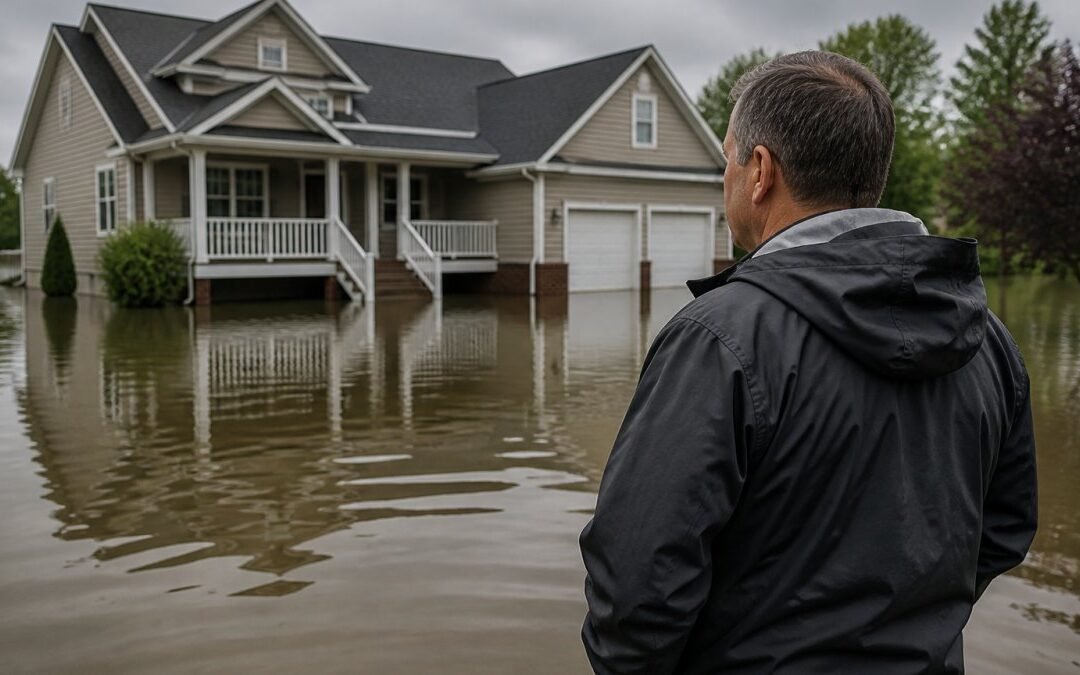
Homeowners insurance does not cover flood damage. A standard policy typically covers sudden water damage from inside your home, like a burst pipe.
This is the coverage gap that catches people off guard. Heavy rainfall, surface water, and overflow from a nearby wash are all flood events, and all sit outside a standard policy.
According to FEMA’s flood insurance guidance, a flood is defined as a general and temporary condition where two or more acres of normally dry land, or two or more properties, are partially or completely inundated.
Nevada’s desert climate makes this easy to dismiss. But flash floods in Clark County are a real and recurring risk, not a rare fluke.
Flood Insurance vs Homeowners Insurance: Key Differences
Flood insurance and homeowners insurance are two separate products. They cover different causes of loss, and you buy them from different places.
| Feature | Homeowners Insurance | Flood Insurance |
|---|---|---|
| Covers rising water | No | Yes |
| Covers wind and fire | Yes | No |
| Sold by | Private carriers | NFIP or private |
| Typical waiting period | None | 30 days |
| Required by lender | Sometimes | In high-risk zones |
The two policies work side by side, not as replacements for each other. If your home floods, your homeowners policy will likely deny the claim. Your flood policy is what pays.
What Counts as a Flood Under a Flood Policy
A flood is a temporary rise of water from an external source that covers normally dry land. It includes surface water, overflow of a river or wash, and mudflow.
For coverage to apply, the event usually must affect at least two properties or two acres. A single puddle in your driveway does not qualify.
Flood vs Water Damage from Plumbing or Rain
Water damage from a burst pipe inside your home is typically covered by homeowners insurance. Flood damage from rain or surface water is not.
The deciding factor is where the water came from. Inside the home equals homeowners. Outside the home equals flood.
Flood Insurance Cost: What Las Vegas Homeowners Should Expect
Flood insurance cost depends on your flood zone, your home’s age and elevation, and how much coverage you buy. There is no single flat rate, and any article that quotes one number is guessing.
What we can do is show you the mechanics, so you understand what moves your premium up or down before you call for a quote.
What Drives the Premium
- Flood zone. Zone AE and Zone A rates are materially higher than Zone X. This is the single biggest factor.
- Base flood elevation (BFE). If your lowest floor sits at or above the BFE, you pay less. If it sits below, you pay more.
- Building age and construction. Older homes, pier-and-beam foundations, and homes with basements or below-grade garages cost more to insure.
The biggest cost driver is your flood zone and elevation relative to the BFE, not your home’s market value. A modest home in a high-risk zone can cost more to insure than a larger home well outside the floodplain.
NFIP vs Private Flood Policies in Nevada
You generally have two paths in Nevada:
National Flood Insurance Program (NFIP). Backed by FEMA, available in participating communities, and the baseline most lenders accept. NFIP building coverage tops out at $250,000 per residential structure, and contents coverage tops out at $100,000. Those caps matter in a market where rebuild costs can exceed them.
Private flood insurance. Offered by private carriers, increasingly available in Nevada. Private policies can offer higher limits, broader coverage (including some basement contents and additional living expenses), and sometimes lower premiums for low-risk homes.
A common pattern is to compare both side by side. NFIP is the safe default; private can be the better fit when you need higher limits or want coverage NFIP excludes.
Building vs Contents: You Choose the Limits
Flood insurance splits into two parts, and you can buy one or both:
- Building coverage protects the structure, foundation, walls, roof, built-in cabinets, and built-in appliances like your furnace and water heater.
- Contents coverage protects personal property, furniture, electronics, clothing, and similar belongings inside the home.
Renters can buy contents coverage without insuring the building. Condo owners typically insure their unit’s interior and contents while the HOA covers the structure. Landlords can insure the structure while tenants cover their own belongings.
Deductibles and Trade-offs
Flood policies typically carry a separate deductible for building coverage and contents coverage. Choosing a higher deductible lowers the premium but raises your out-of-pocket cost after a loss. For a Las Vegas homeowner in Zone X, a higher deductible is often a reasonable trade. For a home in Zone AE, the math usually favors keeping the deductible lower, because the odds of a claim are higher.
Why We Don’t Quote a Number Here
Rates change, and a rate that was accurate last year may not be accurate today. The honest answer is to get a property-specific quote. When you request one, have your address, your flood zone, your BFE if you have it, and your desired building and contents limits ready. That’s what turns a generic estimate into a real number.
If you’re comparing NFIP and private quotes, ask each carrier what the policy excludes, not just what it covers. Basement contents, additional living expenses, and pool or deck damage are common sticking points.
How to Check a Home’s Flood Zone in Las Vegas
Checking your flood zone is free and takes about ten minutes. You can do it before you buy, or after, to see where you stand.
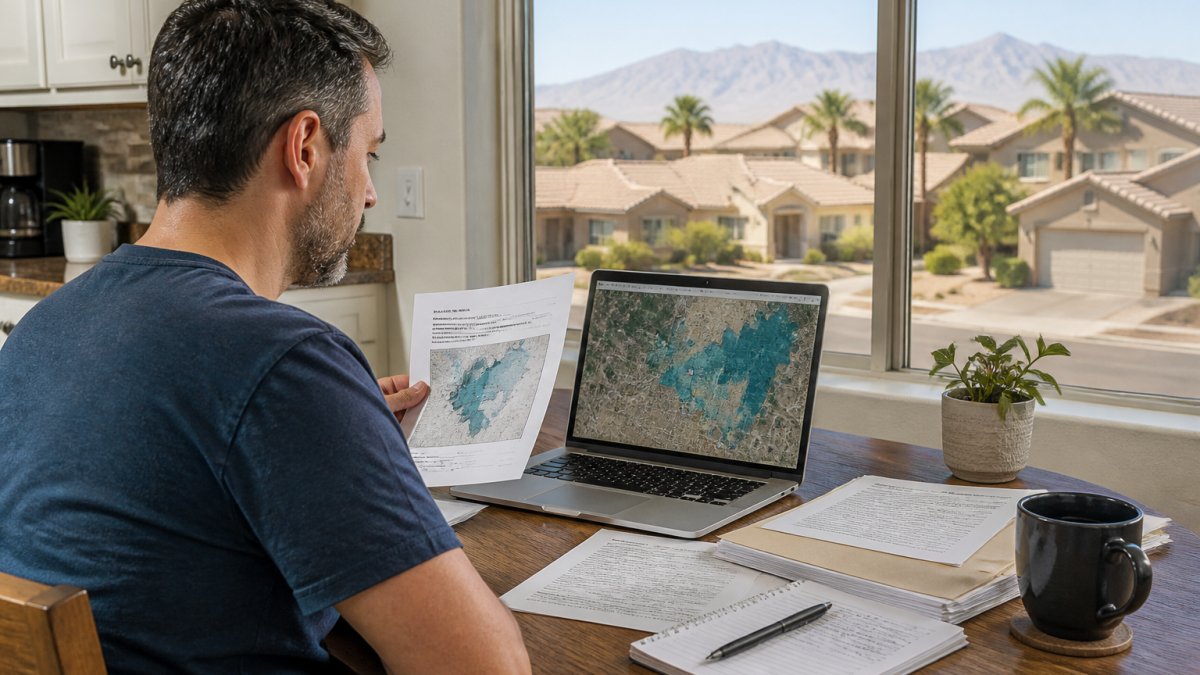
Here’s how to check a property’s flood zone:
- Go to FEMA’s Flood Map Service Center and enter the full street address.
- Open the current Flood Insurance Rate Map (FIRM) panel for that address.
- Note the zone letter and the base flood elevation (BFE) shown on the panel.
- Cross-check the address against Clark County’s flood control and Regional Flood Control District maps.
- Ask your lender whether flood coverage is required for the loan.
- Request a quote based on the actual zone, not a guess.
What the Zone Letters Actually Mean
- Zone X (unshaded): outside the 500-year floodplain. Lowest mapped risk. Most Las Vegas Valley homes sit here.
- Zone X (shaded): in the 500-year floodplain, between the 100-year and 500-year boundaries. Moderate risk.
- Zone A: 100-year floodplain with no BFE published. High risk.
If your address is in Zone AE or A, your lender will almost certainly require flood coverage. If it’s in Zone X, coverage is optional, but optional is not the same as unnecessary.
Why a Zone Letter Isn’t the Whole Story in the Las Vegas Valley
A FEMA zone reflects mapped riverine and sheet-flow risk. It does not capture every way water moves through the valley. The Las Vegas Wash, the Flamingo Wash, the Tropicana Wash, and the Pittman Wash all carry storm runoff through developed neighborhoods.
That means two homes on the same street can face different real-world exposure. A house at the low end of a cul-de-sac, next to a retention basin, or downstream of a channelized wash can take on water even when the FIRM panel says Zone X.
Practical Checks Beyond the Map
- Walk the property after a heavy rain and note where water pools or flows.
- Ask the seller or neighbors whether the garage, driveway, or street has flooded before.
- Look for retention basins, drainage channels, and desert washes within a few blocks.
A low-risk zone still carries risk. FEMA has long noted that a meaningful share of flood claims come from properties outside high-risk areas, a pattern that holds in Clark County too. Treat the map as a starting point, not a verdict.
What Flood Insurance Covers for Your Building and Belongings
Flood insurance splits into two parts: building coverage and contents coverage. You can buy one or both.
Building coverage protects the structure itself. That includes the foundation, walls, and built-in appliances like your furnace and water heater.
Contents coverage protects your personal property. That means furniture, electronics, clothing, and other belongings inside the home.
Here’s what each part typically covers:
- Structure: walls, floors, foundation, roof, built-in cabinets
- Systems: plumbing, electrical, HVAC, water heaters
- Appliances: refrigerators, stoves, washers, dryers
Condo owners and renters have their own options. Renters can buy contents coverage without insuring the building.
Common Exclusions and Coverage Limitations to Know
Flood policies have exclusions. Knowing them now prevents a denied claim later.
Here’s what most flood policies do not cover:
- Basement contents: limited coverage for finished basements
- Currency and stock certificates: generally excluded
- Outdoor property: decks, patios, fences, and pools
There’s also a waiting period. A new flood policy typically takes 30 days to take effect, per FEMA’s flood insurance rules. If a storm is already on the radar, you cannot buy coverage the day before.
If you’re closing on a home, ask your agent about the 30-day waiting period during escrow. Timing your purchase to close the gap can save you from a coverage lapse.
Who Should Consider Flood Insurance in Las Vegas
Flood insurance makes sense for more people than most realize. Las Vegas sits in a desert, but flash floods are a documented, recurring hazard in the valley.
Consider a flood policy if you:
- Live in or near a mapped flood zone
- Have a mortgage in a high-risk area
- Own a home in a low-risk zone but want peace of mind
If you’re searching for flood insurance near me in Las Vegas, our team at United Family Insurance can compare options for you.
Our agents explain each option clearly, so you can pick the coverage that fits your family.
Frequently Asked Questions
How much does flood insurance add to home insurance?
Flood insurance is a separate policy from homeowners insurance, so it adds a distinct premium rather than being bundled into your existing rate. The cost depends on your flood zone, coverage amounts, and deductible. In low-risk areas, preferred-risk policies tend to be more affordable than policies in high-risk zones. Contact United Family Insurance for a quote based on your specific Las Vegas property.
Is flood insurance really worth it?
For many Las Vegas homeowners, yes. Standard homeowners insurance excludes flood damage entirely, meaning a single flood event could leave you paying thousands in repair costs out of pocket. Even properties in moderate-risk areas can flood. If you live near the Las Vegas Wash, in a floodplain, or want protection for your building and belongings, a separate flood policy fills a coverage gap that your homeowners policy leaves open.
Does flood insurance cover a basement?
Flood insurance through the National Flood Insurance Program covers basements, but with limitations. Covered items typically include foundation elements, utility connections, and specific appliances like water heaters and furnaces. Finished basement walls, floors, and personal belongings stored in basements may have limited or no coverage. Review your policy’s basement provisions carefully before assuming full protection.
How can I find out whether my home is in a flood zone?
You can check your flood zone by visiting FEMA’s Flood Map Service Center online and entering your address. You can also ask your insurance agent, who can pull the flood zone designation for your property. In Las Vegas, many areas near washes and retention basins carry moderate or high flood risk even though the surrounding desert may look dry. Knowing your zone helps you decide whether flood coverage makes sense.
Flood risk in the Las Vegas valley is real, and it does not wait for a rainy season. Most homeowners only learn their policy excludes flood damage after a storm, when it’s too late to buy coverage.
United Family Insurance can help you close that gap. We compare the market on your behalf, give you expert advice from real agents, and make filing a claim simple when you need it. Get started with United Family Insurance and protect your home with coverage built around your actual risk.