
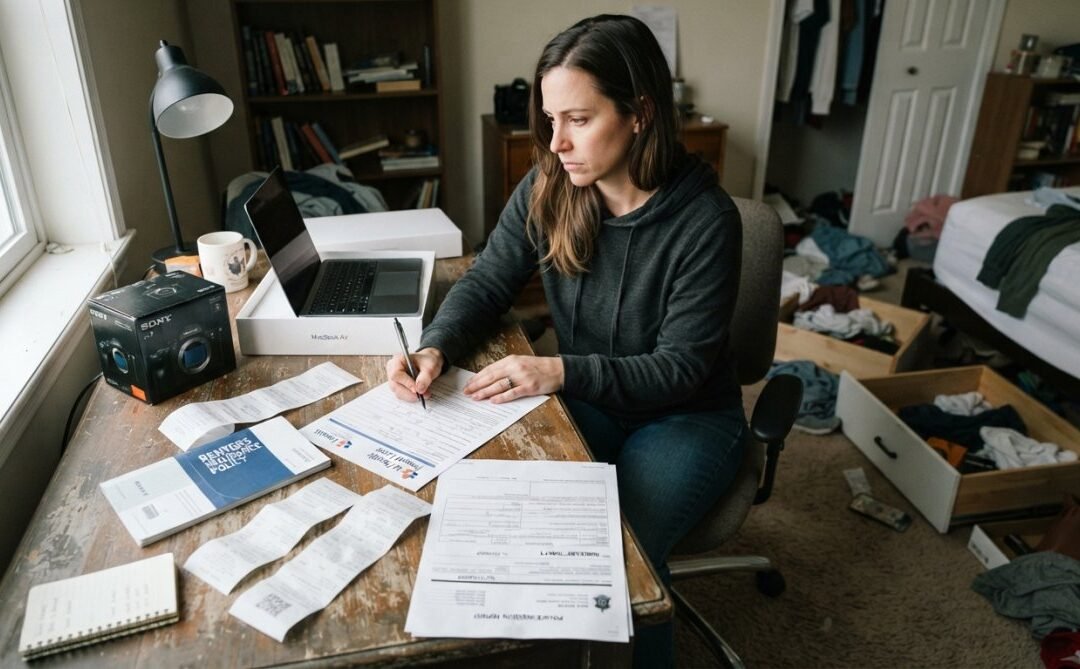
Table of Contents
- What to Do Immediately After Discovering a Theft
- Filing a Police Report for Your Renters Insurance Claim
- Documenting Stolen Items for Insurance Coverage
- Understanding Renters Insurance Deductible and Theft Payouts
- Step-by-Step: How to File a Renters Insurance Claim for Theft
- Renters Insurance Theft Coverage: What’s Included and Excluded
- Filing Deadlines and Claim Timelines
- Handling Denied Claims and Appeals
Last Updated: July 29, 2026
Understanding how to file a renters insurance claim for theft is essential for every tenant. According to the National Association of Insurance Commissioners, renters file thousands of theft claims annually, yet many are delayed or denied due to incomplete documentation. At United Family Insurance, we help tenants navigate this process with clarity and confidence. A single theft can cost thousands in personal property losses, and without proper documentation, you might recover far less than you deserve.
What to Do Immediately After Discovering a Theft
The first hours after a theft are critical. Don’t panic or touch anything, your instinct might be to clean up, but that destroys evidence the claim adjuster will need.
Secure Your Rental Unit
If you believe the thief is still inside, leave immediately and call police from a safe location. Once the space is secure, lock any open entry points. If a window is broken or a door is forced open, document the damage with photos from multiple angles before touching anything. Do not repair the damage yet, the claim adjuster may need to see the original condition.
Do not clean up the scene or rearrange items. Insurance adjusters need to see the space exactly as the thief left it. Cleaning up can be interpreted as destroying evidence, which may result in claim denial.
Contact Law Enforcement
Call the police non-emergency line if the theft occurred while you were away, or 911 if you’re in immediate danger. Be specific: instead of "my laptop was stolen," say "my Dell XPS 15 laptop, serial number 4F7K2M9X, was stolen from my bedroom desk." Include brand names, colors, approximate purchase dates, and any identifying marks or serial numbers.
The police will create an incident report, one of the most important documents you’ll need for your insurance claim. Ask the officer for the report number and when you can access the full report.
If the theft involved forced entry or property damage, police are more likely to file a report and investigate.
Filing a Police Report for Your Renters Insurance Claim
A police report is essential for renters insurance theft claims. Without it, many insurers will deny your claim outright. The report serves as third-party verification that a crime occurred and establishes the incident date and time.
Why a Police Report Matters
Your renters insurance policy requires proof that a theft actually happened. A police report provides that proof and carries far more weight than your word alone. It also protects you from fraud suspicion, if your story matches the police report, the adjuster will have no reason to flag it as suspicious.
Getting Your Police Report Number
After filing a report with police, ask for a report number before you leave and write it down immediately. Most police departments allow online access, phone retrieval, or in-person pickup. Get a copy before you contact your insurance company, you’ll need to submit it with your claim.
The police report number is your most important document after a theft. Keep it in a safe place and reference it every time you communicate with your insurance company.
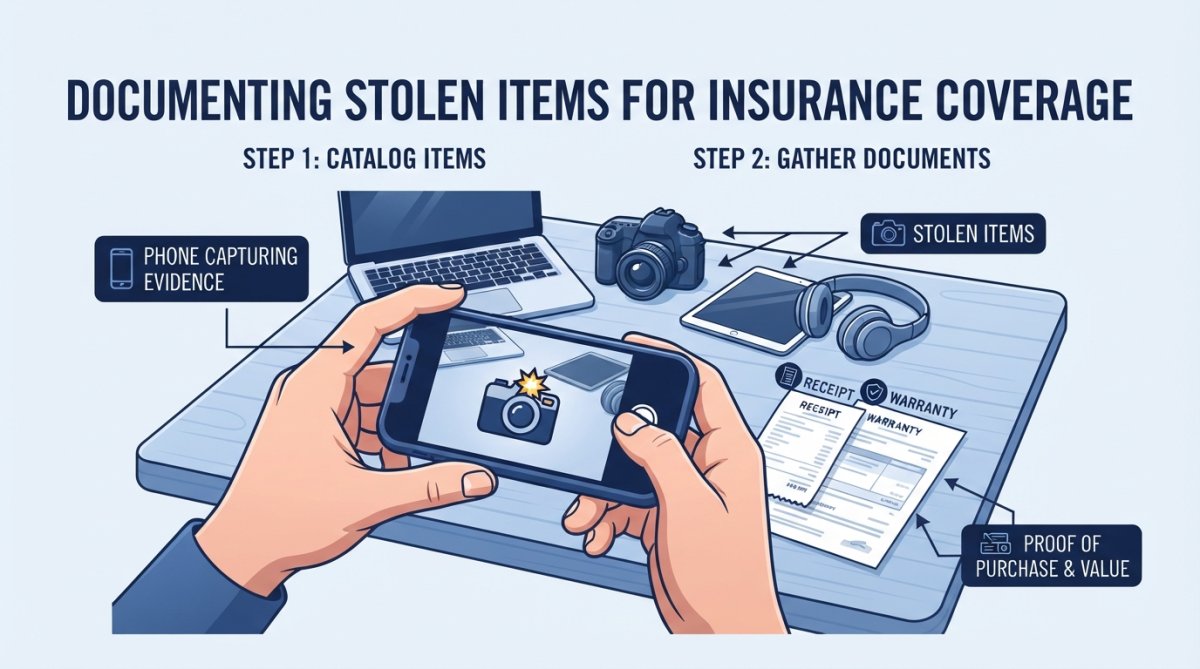
Documenting Stolen Items for Insurance Coverage
Documentation is where most theft claims fail. You can’t simply tell your insurance company "my TV was stolen" and expect a full payout. You need proof that you owned it, what model it was, when you bought it, and how much you paid.
Creating a Detailed Inventory
Start with a complete list of everything stolen. Go room by room and be specific: don’t write "clothes," write "5 pairs of jeans, 3 sweaters, 2 pairs of shoes, 1 winter coat." For electronics and high-value items, include the brand, model number, and color: "Apple MacBook Pro 16-inch, model A2141, space gray, purchased 2023."
Create a spreadsheet with columns for Item Description, Brand/Model, Color, Purchase Date, Purchase Price, Serial Number, and Notes. The purchase price is critical, this is what your insurance company will use to calculate your payout. If you bought a laptop for $1,200 three years ago, the actual cash value today might be $400-$600 depending on depreciation. Estimate prices honestly for items without receipts.
Gathering Proof of Ownership
Receipts are essential. If you have original receipts, scan or photograph them and save them digitally. Credit card statements showing a purchase from a specific store on a specific date also count as proof. For items purchased years ago, use photos or videos showing the stolen items in your home. Warranty documents and registration cards are excellent proof of ownership. Bank or credit card statements showing a charge for the item work too.
If you can’t prove you owned an item, the insurance company may not cover it. Keep receipts, warranty documents, and photos of valuable possessions in cloud storage or a physical safe deposit box.
Understanding Renters Insurance Deductible and Theft Payouts
Your deductible and coverage limits directly affect how much money you’ll receive after a theft.
How Deductibles Affect Your Claim
Your deductible is the amount you pay out of pocket before insurance kicks in. Common renters insurance deductibles are $250, $500, $1,000, or $2,500. If your deductible is $500 and your total theft loss is $3,000, you’ll receive $2,500 from insurance and pay $500 yourself. For theft claims, the deductible applies to your entire claim, not to each item.
Actual Cash Value vs. Replacement Cost
Most standard renters policies cover stolen items at actual cash value, not replacement cost. Actual cash value (ACV) means the current market value of the item, accounting for depreciation. A laptop purchased for $1,200 three years ago might have an ACV of $400-$600 today. Replacement cost means what it would cost to buy a new version of that item today. Standard renters insurance pays ACV. To estimate ACV, check what similar used items sell for on eBay, Facebook Marketplace, or Craigslist.
If your renters insurance policy doesn’t include replacement cost coverage and you want it, ask your agent about upgrading. The premium increase is usually modest, and the payout difference can be significant for newer items.
Step-by-Step: How to File a Renters Insurance Claim for Theft
Filing a claim is straightforward if you’re organized. Follow these five steps to ensure your claim is processed quickly and paid in full.
Step 1: Contact Your Insurance Company
Call your renters insurance company as soon as possible after the theft. Have your policy number ready. Tell the representative you’ve experienced a theft and want to file a claim. Be honest and detailed. Ask the representative for a claim number, write it down, and keep a record of the date, time, representative’s name, and what was discussed.
Step 2: Prepare Your Documentation
Gather everything you’ll need to submit with your claim: police report or report number, inventory of stolen items with descriptions, receipts or credit card statements, photos or videos showing the stolen items in your home, warranty documents or registration cards, photos of the theft scene, and a written statement describing what happened. Organize these documents in a folder or digital file, labeled clearly.
Step 3: Submit Your Claim
Your insurance company will tell you how to submit documentation, through an online portal, email, or mail. Submit everything as soon as you have it assembled. Keep a copy of everything you submit. Email submissions are ideal because you get a confirmation receipt.
Step 4: Work with the Claim Adjuster
After you submit your claim, an insurance adjuster will be assigned to your case. Answer their questions promptly and honestly. If they ask for more documentation, provide it quickly. The adjuster may visit your home to inspect the theft scene and take photos. Cooperate fully, this inspection is standard procedure.
Step 5: Review and Accept Your Settlement
The adjuster will send you a settlement offer detailing which items are covered, the payout for each item, and your total claim payment minus your deductible. Review this carefully. If you disagree with the valuation of an item, you can dispute it by providing additional evidence. If you accept the settlement, sign and return the document. The insurance company will process your payment, typically within 5-10 business days.
Renters Insurance Theft Coverage: What’s Included and Excluded
Not everything in your home is covered under renters insurance.
Items Typically Covered
Renters insurance covers personal property, your belongings inside the rental unit. This includes clothing, furniture, electronics, books, kitchen items, sports equipment, and most other household goods. Jewelry is covered, though many policies have limits (often $1,500-$2,500 total). If you have high-value jewelry, ask about adding a rider. Some policies offer coverage for items stolen outside your home, if your laptop is stolen from your car or your phone is stolen at work.
Common Coverage Exclusions
Money and cash are never covered. Business property is often excluded. Vehicles and vehicle parts are excluded. Animals are excluded. Items in common areas of an apartment building may have limited coverage. Certain high-value items like fine art, antiques, or collectibles may be excluded or subject to limits.
Review your policy’s coverage exclusions before filing a claim. If an item isn’t covered, the adjuster will deny it regardless of documentation.
Filing Deadlines and Claim Timelines
Most policies require you to report a theft within 30-60 days of discovery. Report the theft to your insurance company as soon as possible. After you report a claim, the insurance company has a set timeframe to respond. Most states require insurers to acknowledge receipt within 5-10 business days and begin investigating within 15-30 days. The full claim process typically takes 30-60 days from submission to settlement.
Handling Denied Claims and Appeals
Not every claim is approved. If your claim is denied or partially denied, you have the right to appeal.
Why Claims Get Denied
The most common reason is insufficient documentation. Claims are denied if the theft isn’t reported to police. Coverage exclusions also result in denials. Some claims are denied if there’s a gap between when you last saw the item and when you discovered it was missing.
How to Appeal a Denial
Request a written explanation of the denial. If the reason is insufficient documentation, gather more evidence and resubmit. If the reason is a coverage exclusion, review your policy to confirm it exists. Write a formal appeal letter stating which items you’re appealing, provide additional documentation or evidence, and explain why you believe the denial was incorrect. Submit your appeal to the claims department and keep a copy.
If the insurance company denies your appeal, you can file a complaint with your state’s insurance commissioner. For significant claim amounts, consider consulting an insurance attorney.
Don’t give up after the first denial. Many denied claims are overturned on appeal when additional evidence is provided. Persistence and thorough documentation are key.
Filing a renters insurance claim for theft is manageable when you understand the process and prepare thoroughly. The difference between a claim that’s approved quickly and one that’s denied often comes down to documentation and organization. United Family Insurance helps tenants across Las Vegas and Nevada navigate this process with expert guidance and support. Our agents can review your current coverage, identify gaps, and ensure you have the protection you need before a theft occurs. Reach out today to discuss your renters insurance options and get a quote tailored to your specific situation.
Frequently Asked Questions
How long do I have to file a renters insurance claim for theft?
Most insurance companies require you to file a renters insurance claim within 30 to 90 days of discovering the theft, though this varies by policy. Check your policy documents or contact your insurance company immediately to confirm your specific deadline. Delaying your claim can result in denial, so act quickly even if you're still gathering documentation. Your incident date matters, it's when the theft occurred, not when you discovered it. Contact your policyholder representative or claim adjuster right away to start the process.
Can I file a renters insurance claim for theft without receipts?
You can file a claim without original receipts, but you'll need strong proof of ownership to support your claim. Use alternative documentation like credit card statements, bank records, photos, videos, warranty cards, serial numbers, or testimony from witnesses. Your claim adjuster will evaluate what you provide. Missing receipts may delay your settlement or result in a lower payout based on actual cash value rather than replacement cost. Start gathering any available proof of loss immediately, bank statements showing purchases, emails with order confirmations, or insurance inventory lists can all strengthen your claim.
Will filing a theft claim increase my renters insurance premium?
Filing a theft claim may result in a premium increase when your policy renews, though it depends on your insurance company's underwriting practices and your claims history. A single theft claim is often treated differently than multiple claims. Some insurers may not increase rates for a first theft claim, while others may apply a modest increase. Contact your agent to understand how a claim affects your specific policy. Bundling home and auto insurance or maintaining a clean claims history can sometimes offset increases. Ask about discounts for security measures like deadbolts or alarm systems that might help mitigate rate hikes.
What is the difference between actual cash value and replacement cost for a theft claim?
Actual Cash Value (ACV) reimburses you for what stolen items were worth at the time of theft, accounting for depreciation. Replacement Cost covers the full cost to replace items with new ones of similar quality, with no depreciation deducted. Most renters insurance policies use ACV, meaning older items receive lower payouts. For example, a five-year-old laptop stolen under ACV might pay $300, while Replacement Cost could cover $800 for a new one. Review your policy limits and coverage type before filing your claim. Discuss with your claim adjuster whether your policy offers replacement cost coverage or if you can upgrade to it for better protection.