
Table of Contents
- What Happens if You Don’t Have Renters Insurance: The Real Risks
- Is Renters Insurance Required by Law or Lease Agreement
- What Does Renters Insurance Cover and Why It Matters
- Renters Insurance Liability Coverage: Protecting Against Third-Party Claims
- Renters Insurance Cost: Pricing and What Affects Your Premium
- The Grace Period Myth: Why Waiting to Get Coverage Backfires
- Subrogation and Credit Impact: Hidden Consequences of Being Uninsured
- How to Get Renters Insurance and Mitigate Your Risk Today
Last Updated: July 28, 2026
What Happens if You Don’t Have Renters Insurance: The Real Risks
Without renters insurance, you’re personally liable for stolen belongings, injuries in your apartment, and damage claims, costs that can devastate your finances. A single fire, break-in, or liability claim can result in thousands of dollars in out-of-pocket expenses. Many tenants wrongly assume their landlord’s insurance covers personal property or that they won’t face serious consequences for being uninsured. Both assumptions are dangerously wrong.
Financial Exposure You’ll Face
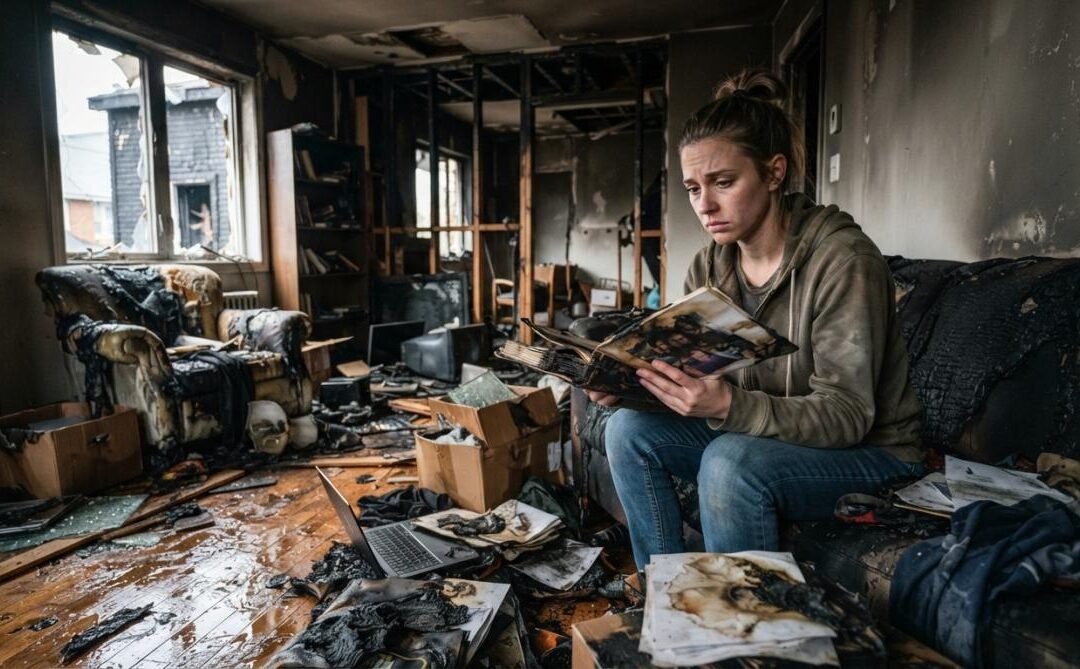
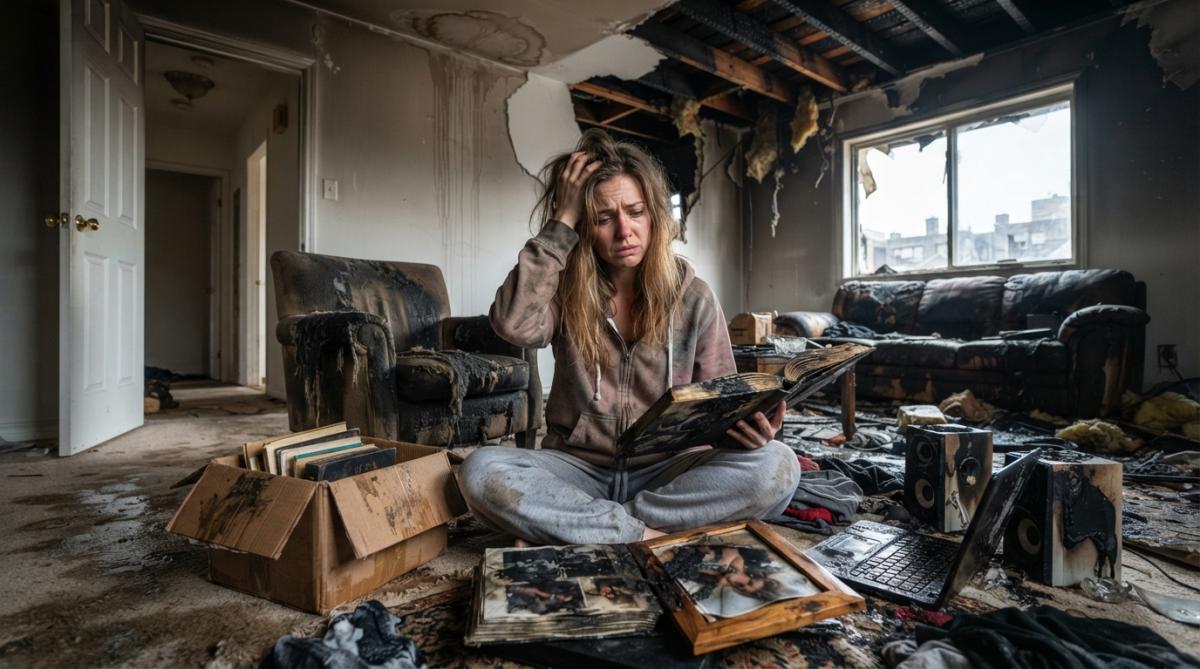
Without renters insurance, you absorb 100% of replacement costs for personal belongings and liability claims. A typical apartment fire can cost $5,000 to $15,000 to replace furniture, appliances, and electronics, entirely your responsibility, since the landlord’s insurance covers only the building structure. Water damage from a burst pipe can destroy your laptop, documents, and furniture, potentially reaching $25,000 or more in liability if your negligence caused damage to the landlord’s property.
Medical bills from guest injuries represent another major exposure. If someone is injured in your apartment due to a preventable condition, you may be sued for medical expenses, lost wages, and pain and suffering, claims regularly exceeding $50,000. Without liability coverage, you face potential wage garnishment or asset seizure.
A single incident without coverage can trigger a debt spiral. Many uninsured tenants turn to credit cards or personal loans to cover replacement costs, adding interest charges on top of substantial bills.
Legal and Liability Consequences
Being uninsured creates legal vulnerability beyond replacement costs. You’re personally responsible for defending yourself in liability lawsuits with no professional support. If a guest slips on a wet floor and breaks their arm, their claim for medical bills, lost wages, and pain and suffering could reach $35,000. Without liability coverage, you’re facing this alone, hiring your own attorney and negotiating settlement at your own expense.
Landlords often require liability coverage in lease agreements to protect themselves from tenant-related lawsuits. Remaining uninsured technically breaches your lease, creating grounds for eviction. This appears on your rental history and makes future housing applications significantly harder.
Liability claims are [the most](/renters-insurance-cost-1-bedroom-apartment/) expensive consequence of being uninsured. A single serious injury claim can result in a judgment that follows you for years, affecting your credit and ability to borrow money.
Courts will award judgments against you regardless of whether you chose not to carry insurance. These judgments can lead to wage garnishment, where creditors take a portion of your paycheck until the debt is satisfied.
Is Renters Insurance Required by Law or Lease Agreement?
Renters insurance is not required by state law in most of the United States, including Nevada. However, your lease agreement almost certainly requires it, creating a binding legal obligation.
State and Local Mandates
Nevada does not mandate renters insurance by state statute. However, some municipalities or specific rental properties may include additional requirements. Just because it’s not required by law doesn’t mean you can skip it, your lease agreement supersedes general law when you’ve signed it. If your lease requires coverage, that requirement is enforceable, and landlords can use non-compliance as grounds for lease termination.
Lease Violation Consequences
Most residential leases require tenants to maintain renters insurance with minimum coverage limits. Violating this clause gives your landlord legal grounds to begin eviction proceedings. Eviction creates a permanent mark on your rental history, making it substantially harder to rent apartments in the future and often forcing you to pay higher deposits or face outright rejection.
What Does Renters Insurance Cover and Why It Matters
Renters insurance provides two critical layers of protection: coverage for your personal property and liability coverage for injuries or damage you cause to others.
Personal Property Protection
Personal property coverage reimburses you for the replacement cost of your belongings if they’re damaged, destroyed, or stolen. Coverage typically comes in two forms: replacement cost (what it costs to buy the item new) and actual cash value (replacement cost minus depreciation). Replacement cost is more valuable and more common.
Most policies include coverage limits of $15,000 to $30,000 for total personal property, though high-value items like jewelry may have sub-limits. Loss of Use coverage pays for temporary housing if your apartment becomes uninhabitable due to a covered loss.
Document your belongings before a loss occurs. Take photos or video of your furniture, electronics, and other items with serial numbers visible. Store this inventory in cloud storage. This documentation dramatically speeds up claims and helps you prove what you owned.
Renters Insurance Liability Coverage: Protecting Against Third-Party Claims
Liability coverage protects you when someone is injured in your apartment or when you accidentally damage someone else’s property, often the most valuable part of renters insurance.
Guest Injuries and Medical Bills
If a guest is injured in your apartment due to conditions you should have addressed, liability coverage pays their medical bills, lost wages, and legal settlements. A guest slips on a wet bathroom floor and suffers a head injury requiring hospitalization. The total claim reaches $45,000. Your liability coverage, typically $100,000 to $300,000 per occurrence, covers this entire amount. Without coverage, you’re personally responsible.
Property Damage You Cause to Others
Liability coverage also protects you if you damage someone else’s property. You accidentally cause a water leak that damages the apartment below, totaling $8,000 in damage. Your liability coverage pays for these repairs and replacements. This protection extends beyond your apartment to common areas and neighbors’ property.
Renters Insurance Cost: Pricing and What Affects Your Rate
Renters insurance is one of the most affordable types of insurance available. Your location significantly affects pricing, urban areas with higher crime rates typically have higher premiums. Your coverage limits directly impact cost, as does your deductible. A higher deductible (like $1,000) results in a lower monthly premium. Your claims history matters; multiple past claims increase your premium. Some insurers offer discounts for bundling with auto insurance or maintaining continuous coverage.
A $500 deductible with $20,000 personal property and $100,000 liability is a common starting point. Coverage limits should reflect your actual belongings, estimate replacement costs for everything you own. If your estimate is $18,000, choose a $20,000 personal property limit. Liability limits of $100,000 are standard and typically sufficient for most renters.
The Grace Period Myth: Why Waiting to Get Coverage Backfires
Many uninsured tenants believe they can wait to purchase coverage until they need it. This is dangerous. Insurance doesn’t work retroactively. If your apartment is burglarized today and you buy insurance tomorrow, the theft is not covered. Your policy only covers losses occurring after the effective date.
A single day without coverage is enough to create a catastrophic gap. Purchase renters insurance before you move into your apartment with an effective date matching or preceding your move-in date.
Subrogation and Credit Impact: Hidden Consequences of Being Uninsured
Two consequences of being uninsured often surprise tenants because they’re less obvious than immediate financial loss.
How Subrogation Claims Affect You
Subrogation is the process where an insurance company recovers costs it paid on your behalf by pursuing the responsible party. Without renters insurance, you must pursue responsible parties yourself, requiring an attorney and evidence gathering. Most people can’t afford this process. If you cause damage to someone else’s property, their insurer might pursue you directly for recovery.
Rental History and Future Housing Applications
Eviction for lease violations appears on your rental history, making it substantially harder to rent in the future. If you face a major liability judgment and can’t pay it, collection actions appear on your credit report, damaging your credit score and affecting your ability to borrow money.
How to Get Renters Insurance and Mitigate Your Risk Today
Getting coverage is straightforward and can be completed in minutes.
Steps to Secure Coverage Quickly
Step 1: Determine your coverage needs. Walk through your apartment and estimate the replacement cost of your belongings. List high-value items separately.
Step 2: Compare policies from multiple insurers. Getting quotes from 3-5 insurers takes 15-20 minutes and can save you hundreds of dollars annually.
Step 3: Choose your deductible and limits. A $500 deductible with $20,000 personal property and $100,000 liability is a common starting point.
Step 4: Purchase a policy with an immediate effective date. Once you’ve chosen a policy, purchase it with an effective date matching your move-in date or immediately preceding it.
Step 5: Obtain proof of insurance. Your insurer provides a proof of insurance document. Keep digital and physical copies for your records.
Bundle renters insurance with auto insurance if you have a car. Most insurers offer 10-15% discounts for bundling, which significantly reduces your total insurance costs.
Comparing Policies and Proof of Insurance
When comparing policies, look beyond price. Evaluate the insurer’s claims process, customer service reputation, and available discounts. Proof of insurance is a critical document your lease likely requires. Keep it accessible for lease renewal or disputes.
| Factor | Why It Matters | What to Look For |
|---|---|---|
| Claims Processing | Determines how quickly you get reimbursed after a loss | Online claims filing, 24/7 support, average payout time |
| Coverage Limits | Determines your protection level | Matches your belongings value and liability exposure |
| Deductible | Affects your monthly cost and out-of-pocket expense | Choose based on emergency savings available |
| Discounts | Reduces your total annual cost | Bundling, loyalty, continuous coverage, safety features |
| Customer Reviews | Indicates real-world service quality | Check independent review sites for recent feedback |
United Family Insurance helps you compare policies from multiple insurers, ensuring you find coverage matching your needs and budget. Our expert agents understand renters insurance nuances and can guide you toward the right coverage limits and deductible choices. Whether you’re in Las Vegas or anywhere in Nevada, we’re here to help you find affordable, reliable coverage.
The consequences of not having renters insurance extend far beyond a single incident. Financial loss, legal liability, eviction, and credit damage can affect your life for years. Getting coverage is affordable and takes just minutes. Contact United Family Insurance today to get a quote and secure the protection you need. Our agents will help you choose the right coverage limits and deductible to match your situation, and you’ll have peace of mind knowing your belongings and liability are protected.
Frequently Asked Questions
Is renters insurance legally required in the United States?
Renters insurance is not required by federal law in the U.S., but many landlords require it as a condition of the lease agreement. Some states and municipalities may have specific mandates. Always check your lease carefully, failure to obtain required renters insurance can be grounds for eviction and may impact your rental history and future housing applications. Even where not mandated, the financial risks of being uninsured often outweigh the cost of a policy.
What happens if a guest gets injured in my apartment and I don't have renters insurance?
Without renters insurance liability coverage, you could be personally liable for medical bills, legal fees, and damages from a third-party injury claim. Your personal assets, wages, bank accounts, and future earnings, could be at risk through a lawsuit. Renters insurance liability coverage typically covers medical bills and legal damages, protecting you from catastrophic out-of-pocket expenses. This is one of the most significant financial risks of going uninsured.
How much does renters insurance typically cost and what affects the price?
Renters insurance pricing depends on factors including your location, coverage limits, deductible amount, personal property replacement cost, and your claims history. United Family Insurance can help you compare market rates to find affordable coverage tailored to your needs. Rather than paying out-of-pocket for property damage, medical bills, or legal fees, most tenants find that renters insurance premiums are a cost-effective way to protect their financial security. Contact us for a personalized quote.
Can my landlord evict me for not having renters insurance?
Yes, if your lease agreement requires renters insurance and you fail to obtain it, your landlord can pursue eviction proceedings. This is considered a lease violation. Beyond eviction risk, being uninsured leaves you vulnerable to financial ruin from property damage, liability claims, and temporary relocation expenses. An eviction on your rental history can make it extremely difficult to secure future housing. Obtaining proof of insurance is a simple way to stay compliant and protected.