
Table of Contents
- What You’ll Need Before Inspecting Your Roof
- How to Check Roof for Wind Damage: Ground-Level Assessment
- Signs of Wind-Damaged Shingles to Look For
- Roof Storm Damage Inspection Checklist
- When to Call a Roofer After a Storm
- Documenting Roof Wind Damage for Insurance Claims
- Common Mistakes to Avoid During Roof Inspection
- Conclusion
Last Updated: July 10, 2026
How to check roof for wind damage is one of the most important responsibilities a homeowner can undertake, especially in Las Vegas and across Nevada where seasonal storms cause significant structural damage. Wind events cause billions of dollars in property damage annually, yet many homeowners don’t know where to start when inspecting their roofs after a storm. This guide walks you through the exact steps to identify wind damage on your roof, what to look for, and when to call in professionals.
What You’ll Need Before Inspecting Your Roof
Safety Gear and Equipment Checklist
Before climbing a ladder or stepping onto your roof, proper safety preparation is non-negotiable. Start with personal protective equipment: slip-resistant shoes with good ankle support, safety glasses to protect against granules and debris, work gloves for grip and protection, and a hard hat to prevent head injuries.
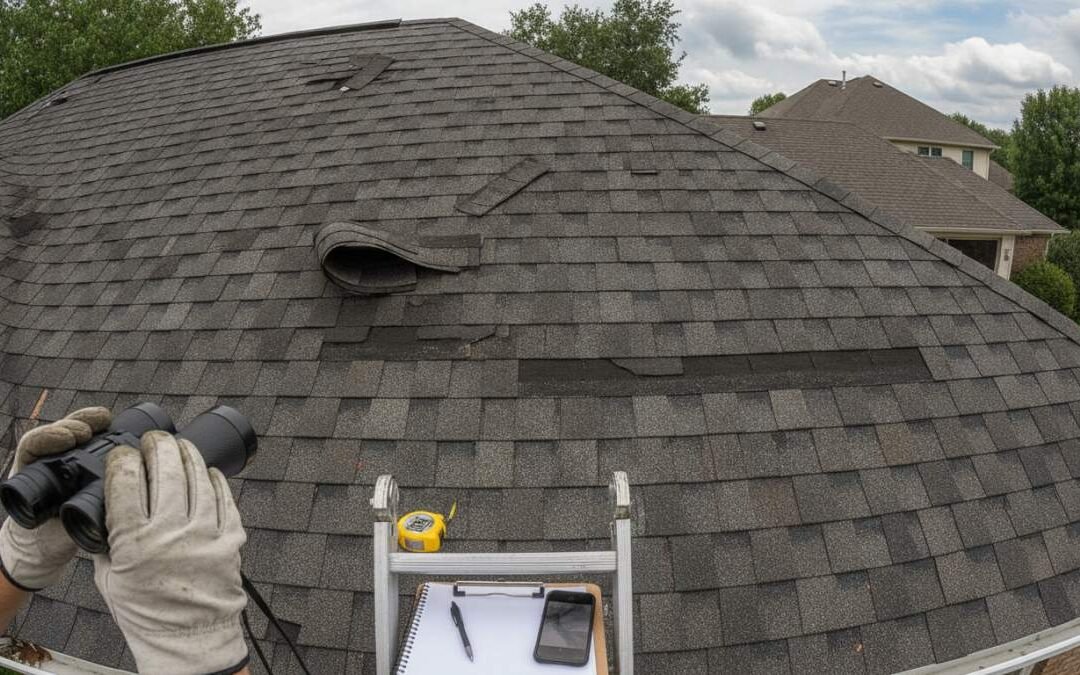
For the actual inspection, bring a flashlight or headlamp, a camera or smartphone with a good lens for insurance documentation, binoculars to inspect from the ground, a notebook and pen, and a ladder with stabilizer bars. Consider renting a drone if you’re uncomfortable on ladders; drone-based inspection has become increasingly popular in Las Vegas for revealing damage invisible from the ground.
Never inspect your roof alone. Have someone stay at ground level to call for help if needed. Avoid inspecting during rain, high wind, or when the roof surface is wet.
How to Check Roof for Wind Damage: Ground-Level Assessment
Inspecting Asphalt Shingles and Granule Loss
Start your inspection from the ground using binoculars or a camera with zoom. This approach is safer and reveals patterns of damage you might miss from the roof itself. Missing shingles create dark spots or gaps in the pattern, and lifted shingles catch light differently than properly seated ones.
Granule loss is one of the earliest indicators of wind damage. After a storm, check your gutters and downspouts for accumulations of dark granules that look like coarse sand. This tells you wind stress affected your roof, even if shingles appear intact from a distance.
From ground level, examine the color and texture of visible shingles. Healthy shingles have uniform color and texture. Damaged areas may show lighter patches where granules have worn away, shiny spots where the asphalt underlayer is exposed, or discoloration from water stains. Pay special attention to south and west-facing slopes, which typically experience the most intense wind exposure.
Use your camera’s zoom to capture close-up images of suspect areas from the ground. These photos provide excellent documentation for insurance adjusters.
Checking Gutters and Downspouts
Gutters and downspouts reveal important information about roof condition. After wind damage, gutters fill with shingle granules, pieces of shingle, and debris. Walk around your home’s perimeter and look for granule accumulation that resembles coarse sand, pieces of shingle material, and debris concentrated in certain areas indicating damage above those sections.
Check for dented or damaged flashing where gutters attach to the fascia. Wind can bend metal components, creating gaps where water enters. Look at the fascia board itself for impact damage from wind-blown debris.
Signs of Wind-Damaged Shingles to Look For
Lifted, Creased, and Curling Shingles
Lifted shingles are the most common wind damage sign. Shingles should lie flat against the roof deck. When wind gets under the edge, it peels the shingle back, breaking the seal and exposing the nails. Close inspection reveals the edge isn’t flush with the shingle below it.
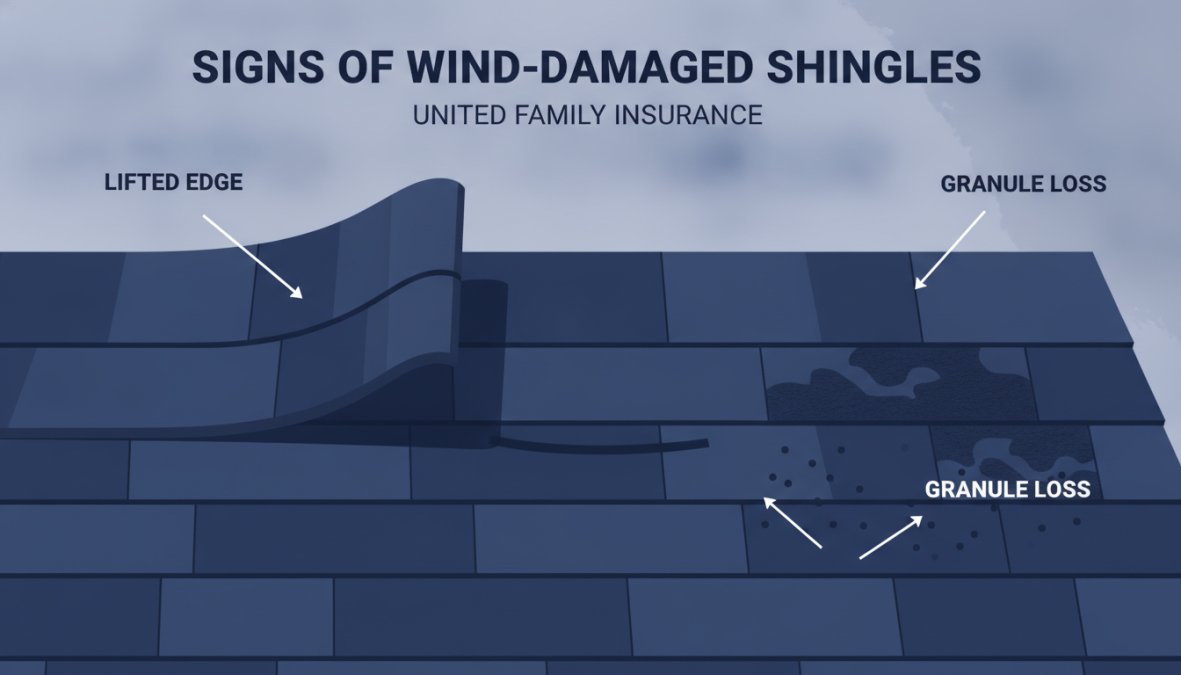
Creased shingles show a visible bend or fold in the shingle material. A creased shingle has lost its structural integrity and becomes a weak point where water intrusion and further tearing occur. Run your hand across the shingle surface; creases are immediately obvious to touch.
Curling shingles curl at the edges, lifting away from the roof deck. Wind-caused curling happens suddenly and affects multiple shingles in the same area, unlike normal age-related curling which develops gradually over years.
Missing Shingles and Wind Uplift Damage
Missing shingles are the most obvious wind damage. Wind uplift damage occurs when wind pressure literally pulls shingles from the roof deck. Wind damage concentrates along edges, valleys, and ridges where wind pressure is highest. Check roof edges, valleys where two slopes meet, ridge caps, and corners of dormers first.
Missing shingles expose the roof deck and underlayment to water intrusion. Even one missing shingle allows water to enter, and the longer it remains unrepaired, the more damage spreads into the roof structure.
Roof Storm Damage Inspection Checklist
Interior Signs of Roof Leaks and Water Intrusion
Not all roof damage is visible from outside. Go into your attic with a flashlight and look for water stains on the roof deck or rafters, wet or damp insulation, visible mold or mildew growth, drips or active water entry during rain, and discoloration of wood indicating previous water exposure.
Interior signs of roof leaks also appear in living spaces. Check ceilings and walls for water stains or discoloration, peeling paint or wallpaper, soft spots in drywall, musty odors, and visible cracks. These interior signs often appear days or weeks after the storm that caused the damage.
Attic and Soffit Inspection
The attic reveals evidence of water intrusion that exterior inspection misses. Look at the roof deck for water stains; fresh stains are light colored, old stains are dark brown or black. Stains in multiple locations suggest widespread water intrusion rather than a single leak point.
Examine soffit vents and the soffit area for separation between soffit and fascia, dents or breaks in soffit material, loose or missing soffit vents, and visible light coming through gaps. Damage here affects the entire roof’s ability to shed moisture.
Interior inspection often reveals damage exterior inspection misses. Water stains in the attic are your most reliable indicator that wind damage has compromised your roof’s water-shedding ability.
When to Call a Roofer After a Storm
Call a professional roofer immediately if you observe missing shingles, large areas of exposed roof deck, visible holes or tears, active water leaks inside your home, significant granule loss in gutters, lifted or curled shingles affecting multiple areas, dented or damaged metal flashing, or visible damage to gutters, downspouts, or fascia.
Even if you don’t see obvious damage, call a roofer if you experienced a significant wind event. Many roofing contractors offer free inspections after storms. Professional assessment catches damage you might miss and provides documentation for insurance claims. For Las Vegas homeowners, scheduling a professional inspection within days of a storm is essential.
Documenting Roof Wind Damage for Insurance Claims
Photography and Evidence Collection
Insurance claims require clear documentation of damage. Take photos from multiple angles and distances, starting with wide shots showing the overall roof and damaged area in context, then close-up photos showing specific damage. Include reference objects in photos for scale. Take photos in good lighting and document the date and time.
Create a written inventory of damage noting the location, type of damage, and severity. For example: "West-facing slope, 15-20 missing shingles in the area above the master bedroom, concentrated near the roof edge."
Document damage immediately after the storm, before weather exposure worsens it or before you make temporary repairs. Insurance adjusters need to see the damage in its original condition.
Age-Related Wear vs. Storm Damage Differentiation
Insurance adjusters must differentiate between damage caused by the storm and damage from normal age-related wear. Age-related wear develops gradually over years and appears scattered throughout the roof. Storm damage appears suddenly and concentrates in specific areas.
Wind-caused missing shingles cluster along roof edges or in the direction the wind was blowing. Wind-lifted shingles affect multiple adjacent shingles in the same area. When documenting damage, emphasize the pattern and concentration. Photos showing 10 missing shingles clustered in a 20-foot section indicate storm damage rather than age-related failure.
Note the timing. If you had a roof inspection six months ago that found no damage, and storm damage appears after the recent wind event, the timeline clearly establishes the cause.
Common Mistakes to Avoid During Roof Inspection
The most dangerous mistake is climbing onto your roof without proper safety precautions. Use binoculars and zoom photography from the ground whenever possible. Don’t assume minor damage isn’t worth documenting; a few lifted shingles or some granule loss are early signs of more extensive damage.
Avoid making repairs before insurance inspection. Once you repair damage, the adjuster can’t see the original condition. Don’t confuse normal shingle condition with damage. Slight color variation and minor granule loss are normal; significant granule loss, lifted edges on multiple shingles, creases, or missing shingles are damage signs.
Don’t ignore interior signs of damage. An attic inspection is as important as the exterior inspection. Don’t delay your inspection; the longer you wait after a storm, the more additional damage weather exposure causes. Finally, don’t attempt complex repairs yourself. Roof work is dangerous and requires specialized knowledge.
Conclusion
Knowing how to check roof for wind damage protects your home’s most critical system. The inspection process, from ground-level assessment through attic examination, reveals damage ranging from obvious to subtle. Proper documentation supports insurance claims and helps you understand repair needs. For Las Vegas homeowners dealing with storm damage, United Family Insurance helps customers navigate roof damage claims by connecting you with qualified adjusters and roofing contractors. Get a quote with United Family Insurance today and protect your home with comprehensive coverage that includes wind damage protection.
Frequently Asked Questions
What does wind damage look like on a roof?
Wind damage on roofs typically appears as lifted, creased, or curling shingles, missing shingles entirely, granule loss (bare spots showing the mat underneath), and damaged or separated flashing around vents and chimneys. You may also notice dented metal components, water stains on interior ceilings, or debris scattered in gutters and downspouts. Severe wind uplift can expose the roof deck, creating immediate water intrusion risks.
Can I check my roof for wind damage myself, or do I need a professional?
You can perform a ground-level inspection yourself using binoculars and visual assessment from the ground and attic. However, climbing on your roof carries significant safety risks, especially after a storm when structural integrity may be compromised. For a comprehensive roof storm damage inspection checklist and professional assessment, contact a roofing contractor. They can identify hidden damage, assess structural concerns, and provide documentation for insurance claims.
How do I document roof wind damage for an insurance claim?
Photograph all visible damage from multiple angles, including close-ups of damaged shingles, flashing, and debris. Document interior signs like water stains and discoloration. Create a written inventory listing affected areas. Collect weather records confirming the storm. Avoid making temporary repairs before the adjuster visits. Contact your insurance agent promptly and provide all documentation. Professional roofing contractors can assist with detailed damage assessment reports required for roof wind damage insurance claim approval.
How do I tell the difference between age-related wear and actual storm damage?
Age-related wear develops gradually over years, uniform discoloration, slow granule loss, and natural curling across the entire roof. Storm damage is sudden and localized: fresh missing shingles, new granule exposure, creased or lifted sections in specific areas, and debris patterns matching the storm direction. Check weather records and your roof's installation date. If damage appeared after a documented storm event, it's likely storm-related. Professional roofers can distinguish between the two for insurance documentation purposes.
The key to protecting your home after a wind event is acting quickly. Document damage thoroughly, contact your insurance company promptly, and work with qualified professionals to assess and repair damage. This systematic approach ensures you don’t miss damage and that your insurance claim receives proper consideration.