

Last Updated: November 12, 2026
Quick Summary
If a contractor has no insurance, you may be left paying for injuries and property damage yourself, since the job-site claim can be directed at you. Your own homeowners policy often excludes injuries to hired workers, so the gap can be costly. Verifying a certificate of insurance before work begins is the best way to prevent this, and what happens if a contractor has no insurance depends on the damage involved.
- Your homeowners policy may exclude injuries to people hired to perform work.
- Injured workers or their attorneys may look to the property owner for payment.
- Request a certificate of insurance directly from the contractor’s insurance agent.
- Confirm the policy is active for the full length of your project.
- Verify insurance for every subcontractor on your property, not just the prime contractor.
Table of Contents
- Why an Uninsured Contractor Puts Your Property at Risk
- Financial and Legal Risks of Hiring a Contractor Without Insurance
- What Happens If a Subcontractor Does Not Have Insurance
- Nevada Licensing and Insurance Requirements for Las Vegas Projects
- How to Verify a Contractor’s Insurance Step by Step
- Contract Language, Waivers, and When a Contractor Lied About Insurance
- What to Do If You Have Already Hired an Uninsured Contractor
- Frequently Asked Questions
Why an Uninsured Contractor Puts Your Property at Risk
Hiring a contractor with no insurance can leave you holding the bill when something goes wrong. If a worker is hurt or a job damages your home, the costs can land on you. Knowing what happens if a contractor has no insurance helps you protect your property before work begins.
Most homeowners assume the contractor’s insurance covers everything. Without a valid policy, that assumption fails. Coverage gaps often show up at the worst possible time, when a crew member is injured or a pipe bursts during a remodel.
Common ways the risk shows up:
- A worker falls from a ladder on your property
- A crew member damages your roof, floors, or landscaping
- A subcontractor with no coverage causes a flood or fire
- Your homeowners policy denies the claim
Your own policy may not cover job-site accidents, since many homeowners policies exclude injuries to people hired to perform work. Learn whether contractors are legally required to carry workers’ compensation and what exemptions exist. Verifying coverage helps close that gap.
Financial and Legal Risks of Hiring a Contractor Without Insurance
Hiring an uninsured contractor exposes you to several financial and legal risks. Some of these costs are hard to predict, which makes them easy to underestimate. Understanding them now helps you make a safer choice.
The main risks fall into two groups: injuries on the job site and property damage. Both can lead to lawsuits and high legal costs.
Injuries on the job site and workers’ compensation
Workers’ compensation insurance pays medical bills and lost wages for employees injured on the job. A contractor without it may leave an injured worker with no source of payment.
In many cases, the injured worker or their attorney will look to the property owner. Liability can follow you even when you did not supervise the work.
- Medical bills for the injured worker may be sent to you
- Lost wages and rehabilitation costs can become a claim
- Legal fees can add up quickly, even if you win
Property damage, lawsuits, and legal costs
Property damage claims are another major risk. If an uninsured crew damages a neighbor’s fence or your own home, general liability insurance is what normally pays. Without it, repair costs may come out of your pocket.
Lawsuits also add expense. Even a claim you ultimately win can cost thousands in legal fees and delays.
What Happens If a Subcontractor Does Not Have Insurance
Many general contractors hire subcontractors to handle electrical, plumbing, or framing work. If a subcontractor has no insurance, the general contractor’s policy may not fully protect you.
Some general contractors require every sub to carry coverage and provide proof. If a sub is uninsured, you can compare insurance options for independent contractors to help close the coverage gap. Others do not check. Ask for certificates of insurance from every company on your project, not just the prime contractor.
Nevada Licensing and Insurance Requirements for Las Vegas Projects
Nevada takes contractor licensing and insurance seriously, and the rules differ by contractor type and project scope. If you hire an uninsured contractor in Las Vegas, you may be dealing with someone who is also unlicensed, a combination that can leave you with fewer remedies and more risk.
The Nevada State Contractors Board (NSCB) licenses and regulates contractors in the state (License Search). Licensing thresholds, insurance, and bonding requirements vary, so check the current rules directly with the NSCB before you hire.
Nevada issues different license classifications, and each classification may carry its own insurance and bonding requirements. You can compare commercial liability insurance options for Las Vegas contractors that meet local project requirements. A specialty contractor doing electrical or plumbing work may have different coverage obligations than a general building contractor.
For Las Vegas projects, you can verify a contractor’s license status through the Nevada State Contractors Board’s online license search or by calling the board directly. The NSCB website allows you to search by license number, business name, or individual name, and it shows the license status, classification, and any disciplinary actions.
Watch out: A contractor who says they are “licensed” but cannot provide a license number, or whose license shows as expired or suspended, is a serious red flag. Review the fines and compliance obligations Nevada imposes on employers without required workers’ comp.
If you hire an unlicensed contractor, you may have limited recourse if something goes wrong. Recovery options for an unlicensed contractor’s work depend on the circumstances, and that protection does not help you recover for property damage or injuries. Your best protection is to verify both the license and the insurance before any work begins.
How to Verify a Contractor’s Insurance Step by Step
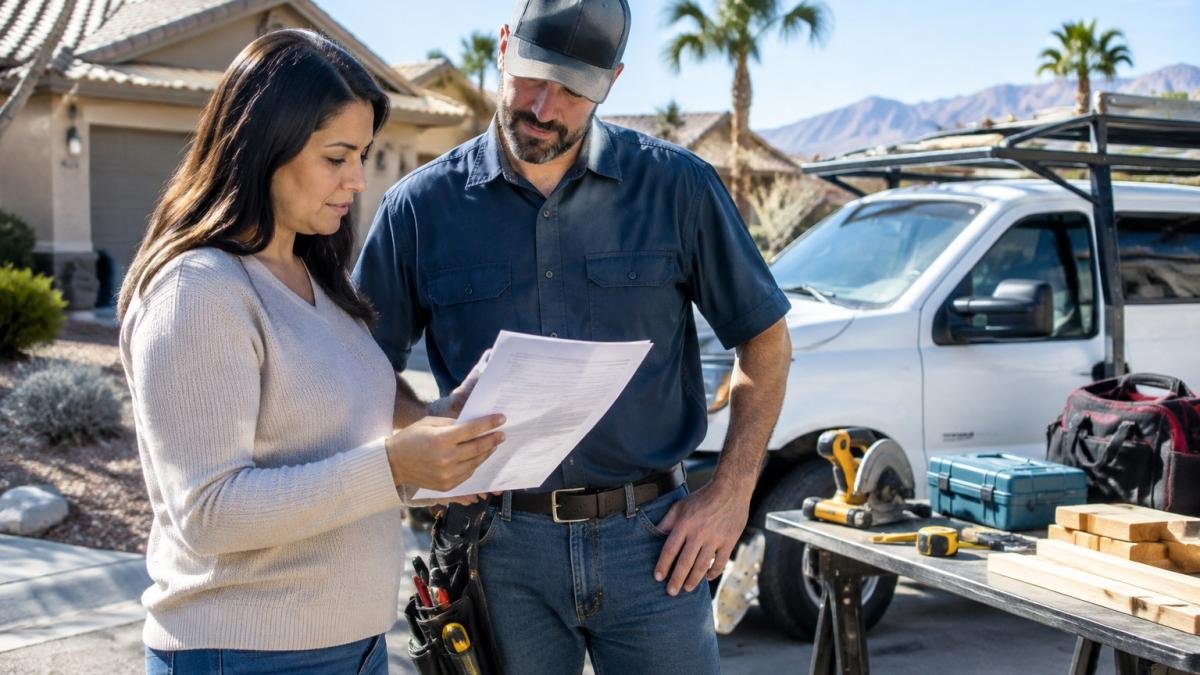
Verifying insurance takes about 15 minutes and can prevent serious losses. For Las Vegas projects, you have local resources that make the process more reliable. Follow these steps before signing any contract.
-
Ask for a certificate of insurance (COI). Request one directly from the contractor’s insurance agent, not just a copy from the contractor. Read what a certificate of insurance is and how to check one before you review it. The COI should list the insurance company, policy number, policy dates, coverage types, and limits.
-
Check the policy dates. Make sure coverage is active for the full length of your project. A policy that expires mid-project leaves you exposed. If the project runs longer than the policy term, ask for an updated COI before the expiration date.
-
Confirm the coverage types and limits. Look for general liability and workers’ compensation. General liability typically covers third-party bodily injury and property damage, but it may exclude damage to your own property while work is in progress, that is often covered by builders’ risk insurance. Workers’ compensation covers employees injured on the job, but it does not cover the contractor if they are a sole proprietor with no employees. Ask whether the contractor has workers’ compensation or a valid exemption.
-
Call the insurance company. Ask the carrier to confirm the policy is active and that the coverage types and limits match the COI. A COI is evidence of coverage, not the policy itself, so a call to the carrier is your best confirmation.
-
Check the named insured. The name on the policy should match the business you are hiring. If the contractor operates under a different legal name, ask for proof that the policy covers that entity.
-
Repeat for subcontractors. Verify every sub who will be on your property. General contractors may require subs to carry coverage, but you should not assume they have checked.
For Las Vegas residents, you can also check the contractor’s license status through the Nevada State Contractors Board’s online search. The NSCB website shows whether a license is active, the classification, and any disciplinary history. A licensed contractor is more likely to carry the required insurance, but you should still verify the COI separately.
Watch out: A contractor who refuses to provide a certificate or delays sending one is a serious warning sign. Equally risky is a COI that lists a different business name or shows coverage limits that seem too low for the project size.
Keep copies of every COI and any correspondence with the insurance company. If a dispute arises later, these records will help you show that you acted reasonably.
The steps below summarise how to check a contractor’s insurance before any work begins.
| Step | What to do | Time or frequency |
|---|---|---|
| Ask for a certificate of insurance | Request it from the contractor’s insurance agent | Before signing any contract |
| Check the policy dates | Confirm coverage lasts the full project | Before work starts |
| Confirm coverage types and limits | Look for general liability and workers’ compensation | Before work starts |
| Call the insurance company | Confirm the policy is active and matches the COI | Before work starts |
| Check the named insured | Match the policy name to the business hired | Before signing |
| Repeat for subcontractors | Verify every sub on your property | Before any sub starts work |
Contract Language, Waivers, and When a Contractor Lied About Insurance
Your contract should state that the contractor carries insurance and must provide proof. Ask that the contract require notice if coverage lapses.
Be cautious about any waiver that asks you to give up rights if the contractor is uninsured. Read these carefully or have an attorney review them. Signing an uninsured contractor waiver can remove your ability to recover damages later.
If a contractor lied about insurance, document the false statements in writing. Keep copies of the contract, the COI they gave you, and any messages. Speak with an attorney about your options, especially if injuries or large losses occurred.
What to Do If You Have Already Hired an Uninsured Contractor
If work has already started, act quickly. Pause the project if safety is at risk, and do not let uninsured workers continue on your property.
- Stop work until coverage is confirmed. Tell the contractor in writing.
- Document everything. Take photos and keep records of communications.
- Notify your homeowners insurer. Report any damage or injury as required by your policy.
- Get a written plan. Ask the contractor to provide a new COI before work resumes.
- Consult a professional. An attorney or licensed insurance agent can explain your options.
United Family Insurance can help you review coverage options for your home, auto, and commercial needs, and compare policies so you can make an informed choice. Contact our team to talk through your situation and get a quote for the protection you need.
Frequently Asked Questions
What happens if I hire an uninsured contractor?
If an uninsured contractor is injured on your property, you may be held responsible for medical bills and related costs, depending on the circumstances. If the contractor damages your home or a neighbor’s property, a general liability claim may not be available, leaving you to pay out of pocket or pursue a lawsuit. Your homeowners policy may also deny coverage for work-related claims tied to an uninsured contractor. Requesting a current certificate of insurance before work begins and confirming it directly with the insurance carrier is the most reliable way to avoid these outcomes.
Can I be held responsible if an uninsured contractor gets hurt on my property?
In some cases, yes. Property owners can face liability claims when a worker is injured on their property, particularly if the owner controlled the work site or hired the worker directly. Nevada workers’ compensation rules and the specific facts of the job both affect the outcome, so the answer is not automatic. Requiring proof of workers’ compensation coverage from every contractor and subcontractor on the job is the most practical way to reduce this exposure. Consulting a Nevada attorney is advisable for questions about a specific injury.
What should I do if my contractor cannot provide proof of insurance?
Stop the project until the contractor provides a current certificate of insurance that names you as the certificate holder. Ask for the insurance carrier’s name, policy number, and policy dates, then contact the carrier directly to confirm the coverage is active. Do not rely on a screenshot or a verbal assurance alone. If the contractor refuses or cannot produce documentation, consider hiring a licensed, insured contractor instead. United Family Insurance agents can help you understand what coverage a project should carry.
Does homeowners insurance cover damage caused by an uninsured contractor?
Homeowners policies often exclude damage caused by contractors or business activities, so coverage is not guaranteed. Your insurer may pay for certain losses to your home, but it may deny claims tied to a contractor’s work, and it generally will not cover the contractor’s own liability. Reviewing your policy’s exclusions and limits before hiring anyone is important. For a clear explanation of how your specific policy applies, contact United Family Insurance for guidance on your coverage.
