
Table of Contents
- 1. Mechanical Breakdowns and Rig Maintenance
- 2. Tire Blowouts and Weight Limit Violations
- 3. Electrical Fires and Power Surge Damage
- 4. Water Damage, Black Water Tanks, and Sanitation Hazards
- 5. Full-Time RV Insurance Requirements You Cannot Skip
- 6. Legal Residency for Full-Time RVers: Taxes and Domicile
- 7. Healthcare Access and Connectivity for Remote Work
- 8. RV Maintenance Checklist for Beginners
- Frequently Asked Questions
Last Updated: September 9, 2026
1. Mechanical Breakdowns and Rig Maintenance
The allure of full-time RVing is freedom, but the reality is that you are responsible for a home and a vehicle that share one chassis. Engines, generators, and slide-out mechanisms require preventative maintenance on a schedule, not just when something breaks. A breakdown far from a repair shop can erase the financial benefits of the lifestyle.
Mechanical failure is a leading source of frustration for full-time RVers. A strict maintenance calendar for oil changes, belt replacements, and generator servicing prevents small issues from becoming roadside emergencies. A professional inspection before you commit can uncover hidden issues a casual walkthrough misses.
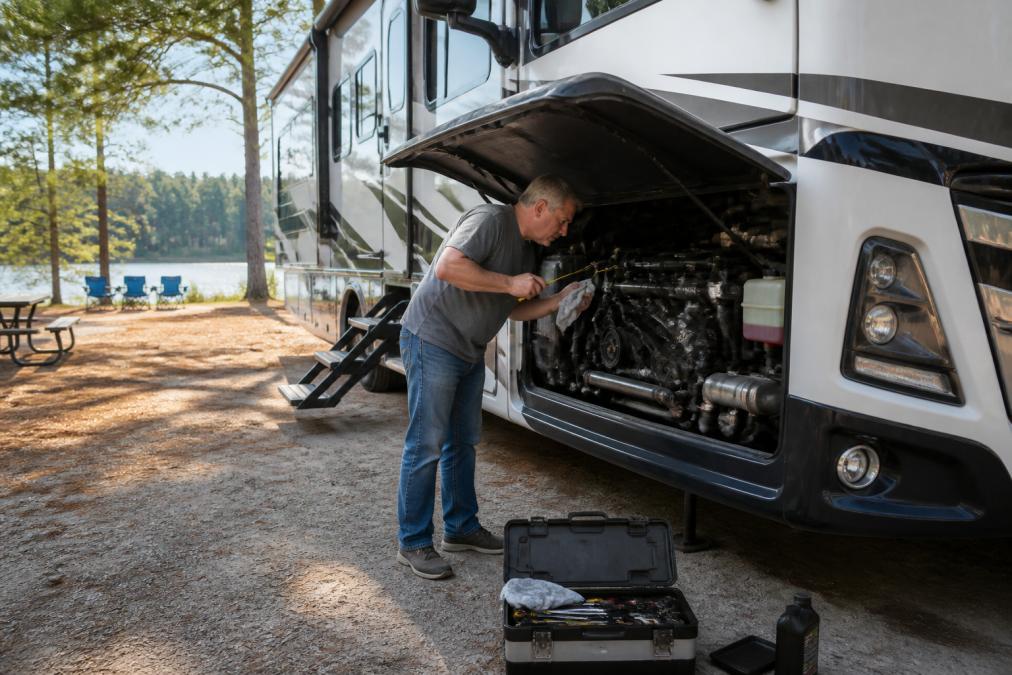
Skipping routine maintenance on your chassis or generator is the fastest way to turn a planned route into an unplanned, expensive layover. A breakdown in a remote area can cost you days of travel and hundreds of dollars in emergency service calls.
2. Tire Blowouts and Weight Limit Violations
Tire blowouts are one of the most dangerous and common risks for full-time RVers, largely because they are preventable. Most are caused by under-inflation, overloading, or running tires past their service life, all of which place excessive heat stress on the rubber. A blowout at highway speed can cause a loss of control (nhtsa.gov).
You must know your vehicle’s cargo carrying capacity and adhere to it strictly, as exceeding weight limits strains tires and suspension components. A tire pressure monitoring system (TPMS) is an essential investment, alerting you in real time to pressure and temperature changes before a failure occurs. The TireMinder i10 TPMS monitors up to 20 tires simultaneously and provides real-time alerts.
3. Electrical Fires and Power Surge Damage
Plugging into a campground pedestal without protection can destroy your RV’s electrical system. Faulty wiring can send power surges through your rig, frying appliances and your converter in a split second. The campground’s breaker only protects the pedestal, not your equipment.
Using a surge protector between the pedestal and your shore power cord is non-negotiable for full-time RVers. The Progressive Industries EMS-PT30X offers multi-mode surge protection and automatic shut-off for high or low voltage conditions. While a basic surge protector handles spikes, an electrical management system also monitors for wiring faults like open grounds.
4. Water Damage, Black Water Tanks, and Sanitation Hazards
Water is the enemy of every RV, and full-time living multiplies your exposure to leaks from roofs, windows, and plumbing fixtures. A small, undetected leak can lead to rot, mold, and structural damage that is expensive and hazardous to your health. Regular inspection of seals and caulking is a task you cannot skip.
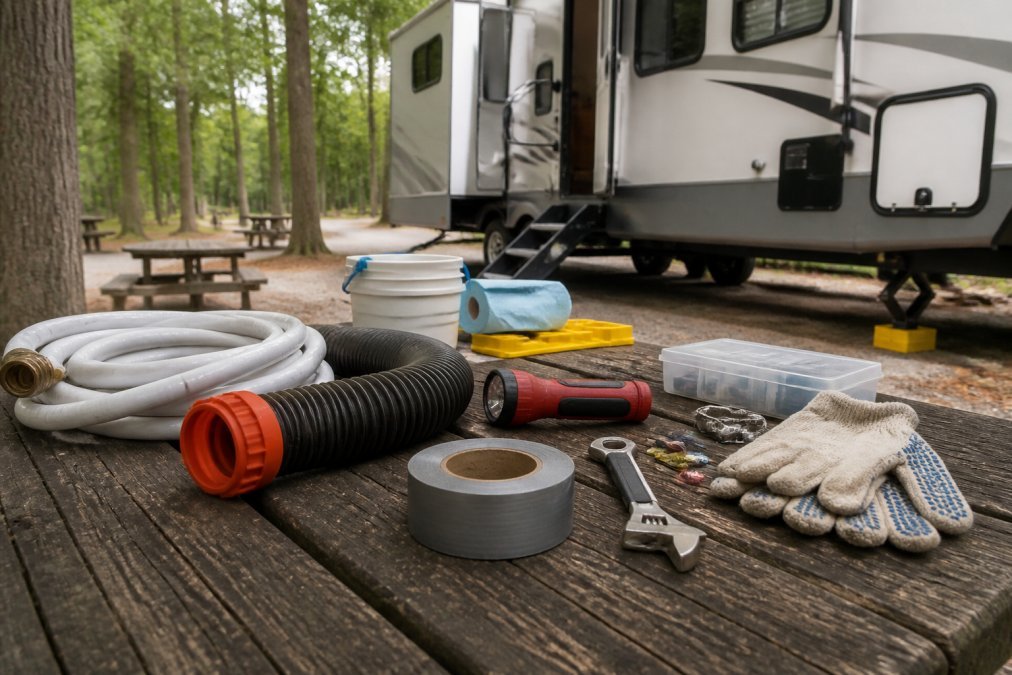
Managing your black water tank and gray water systems properly is essential to avoid sanitation hazards. Using a quality sewer hose kit, like the Camco RhinoFLEX, prevents messy leaks and makes waste disposal safer. Learn the proper order for dumping tanks, starting with the black water tank and finishing with the gray water to rinse the hose.
5. Full-Time RV Insurance Requirements You Cannot Skip
Many new full-time RVers assume their standard auto or recreational vehicle policy covers them when they live in the rig. Standard RV policies often exclude coverage for full-time living, leaving you unprotected for liability and personal property. If you are living in your RV, you need full-time RV insurance requirements that address residential-style risks.
Full-time coverage typically includes liability protection, comprehensive and collision coverage, and personal property coverage for your belongings inside the RV. Many policies also offer emergency expense coverage, which pays for lodging if your rig becomes uninhabitable due to a covered loss. Since premiums vary based on RV age and value, an agent who compares carriers can ensure you have the right coverage without overpaying.
Ask your insurer specifically if your policy includes “full-time” coverage. If the answer is no, your personal belongings may not be covered if your rig is totaled, and you could be denied liability claims related to your residence.
6. Legal Residency for Full-Time RVers: Taxes and Domicile
When you sell your house and hit the road, you don’t stop being a resident of somewhere. Your domicile state determines your tax liability, voting rights, vehicle registration, and even your ability to get certain types of insurance. Many full-time RVers choose a state with no income tax, but you must establish residency legally to avoid tax problems in your previous home state.
Establishing a domicile requires more than just a mailing address; you typically need a physical address, a driver’s license, and vehicle registration in that state. Services like the Escapees RV Club provide mail forwarding and a legal address, which are essential for full-time RVers needing a legal domicile. The rules for residency requirements vary by state, so research the specifics before you cut ties with your current home.
7. Healthcare Access and Connectivity for Remote Work
Healthcare is often the most overlooked risk for full-time RVers, as traditional health insurance plans may not cover you out of state. A sudden illness far from your network could result in massive out-of-pocket costs if your plan lacks national coverage. Verify that your plan offers out-of-state coverage or investigate options like health sharing ministries or plans with national networks.
The Healthcare Logistics Problem
The challenge isn’t just having a plan; it’s the logistics of using it. A full-time RVer with a PPO from a previous employer in Texas may find a specialist in Arizona who is ‘out-of-network’ despite the plan’s ‘national’ claim, because many PPOs use regional networks. Ask not just ‘Do you cover out-of-state?’ but ‘Do you have a national provider network, or are you a regional PPO?’ If you’re on a regional plan, budget for out-of-network costs or consider a plan with a national network through the federal marketplace. For prescriptions, ensure your plan’s formulary is accepted at national pharmacy chains like CVS or Walgreens in-store.
The Remote Work Infrastructure Gap
For those working remotely, reliable connectivity is the backbone of the lifestyle, and campground Wi-Fi is rarely sufficient for professional work. A strong setup requires a cellular router, an external antenna, and a data plan with a large hotspot allowance. You should also have a backup power source, like the Anker SOLIX portable power station, for outages or boondocking.
The Technical Setup for a Digital Nomad
Most ranking articles stop at ‘get a hotspot,’ but the real risk is a failed video call during a client presentation. A robust setup is a three-tier system:
- Primary Connection: A dedicated 5G cellular modem/router (like the Pepwave or Cradlepoint) with an external roof-mounted antenna. This is not a phone hotspot; it’s a router designed for constant use and can handle multiple devices. A plan from a provider like T-Mobile Home Internet or Verizon’s data-only plans can offer 100-500 GB of data per month.
- Redundancy: A second, separate carrier’s data plan on a phone or a portable hotspot. If your primary tower goes down, you can fail over to the second carrier. This is critical because no single carrier covers all of the United States equally, especially in the Mountain West or rural areas.
- Power Redundancy: A portable power station like the Anker SOLIX F2000 or a Jackery Explorer 2000 Pro is not just for convenience; it’s for maintaining your router and laptop during a campground power outage. A typical 2,000-watt-hour unit can power a router and laptop for 8-10 hours, which is essential for meeting deadlines (energy.gov).
A single 5G hotspot with a 50GB data cap is not a professional remote work setup. You will run out of data, experience throttling, and lose connectivity during critical calls. Plan for a primary and a backup data source from different carriers.
The ‘Work from the Road’ Reality Check
Before you commit to full-time RVing, test your setup for one week at a campground that claims to have ‘high-speed Wi-Fi.’ A boondocker in Arizona may find their Starlink connection unusable due to tree cover, or a traveler in the Pacific Northwest may find their Verizon signal non-existent in a national forest. The risk is not just inconvenience; it’s losing a job or a client.
8. RV Maintenance Checklist for Beginners
For those new to the lifestyle, an RV maintenance checklist for beginners is essential to avoid being overwhelmed. Start by creating a seasonal checklist covering tire pressure, roof seals, battery water levels, and the condition of your belts and hoses. This routine prevents small problems from escalating into major repairs.
A basic checklist should include inspecting propane systems for leaks, testing smoke and carbon monoxide detectors, and verifying your fire extinguisher is charged. Learn how to winterize your rig if you plan to travel in cold climates, as frozen pipes can cause extensive damage. For leveling, tools like the LevelMatePRO help you park correctly to protect your refrigerator and slide-outs.
The Seasonal Maintenance Calendar
A common mistake is treating maintenance as a single event. A more effective approach is a seasonal calendar:
- Spring (Pre-Travel): Inspect the roof for cracks or delamination, reseal any suspect areas with a self-leveling lap sealant. Check the air conditioner’s gasket and clean the filters. Flush the water heater and sanitize the fresh water tank with a bleach solution (1/4 cup per 15 gallons of water) (the CDC).
- Summer (Active Travel): Check tire pressure every 2-3 days of driving, especially in extreme heat. Inspect the wheel bearings for grease leaks. Clean the refrigerator’s cooling fins and ensure the roof vent fans are operational.
- Fall (Pre-Winterization): Drain and flush the black and gray tanks. Remove and store the sewer hose. Run antifreeze through the plumbing system if you’re not using the rig in freezing temperatures. Inspect all exterior seals and window gaskets for wear.
- Winter (Storage or Cold Travel): If you’re in a cold climate, keep the battery on a trickle charger and check the tire pressure monthly. If you’re in a warm climate, run the generator under load for 30 minutes monthly to prevent fuel system issues.
Emergency Evacuation Protocols
Specific protocols for evacuating a 40ft rig during wildfires or hurricanes are rarely detailed. A full-time RVer is not a car driver; you cannot just ‘get on the highway.’ You need a plan.
- Know Your Escape Route: Before you park for the night, identify two exit routes from the campground. A common pattern is that a camper in a forest service campground is blocked by a fallen tree or a flooded road. Know which direction is the safest to leave, not just the most direct.
- The 15-Minute Rule: If a wildfire or hurricane warning is issued, you do not have time to pack up a full campsite. Your rig should be ‘camp-ready’ at all times: sewer hose disconnected, power cord unplugged, and leveling jacks retracted. The goal is to be able to hitch up and leave within 15 minutes.
- Fuel Strategy: Keep your fuel tank at least half full at all times. During an evacuation, gas stations will be crowded or out of fuel. A diesel rig towing a car can get 8-10 mpg, so a 50-gallon tank gives you a 400-500 mile range, but only if you have fuel.
- The ‘Go Bag’ for Your Rig: Have a dedicated bag with your important documents (insurance, registration, passports), a paper map (cell towers will be down), a first-aid kit, and a week’s worth of prescription medications. This bag should be stored in the cab, not in the basement storage.
Your RV maintenance checklist is not just about preventing breakdowns; it’s about enabling a rapid, safe departure in an emergency. A well-maintained rig is an evacuation asset. A neglected rig is a liability.
The Pre-Departure Checklist
Before you pull out of any site, do a 5-minute walk-around. Check that the steps are retracted, the awning is secured, the antenna is down, and the storage bay doors are latched. A camper often loses a bay door or tears off an awning because they skipped this final walk-around. It’s a habit that experienced full-timers never skip.
Frequently Asked Questions
What is the 3-3-3 rule for RVs?
The 3-3-3 rule is a travel guideline that suggests driving no more than 300 miles per day, arriving at your destination by 3:00 PM, and staying for at least 3 days. Following this rule helps full-time RVers reduce travel fatigue, avoid rushing through dangerous weather, and allows time for proper rig maintenance. It also lowers the risk of accidents caused by driving while tired.
Does standard homeowners insurance cover full-time RV living?
No, standard homeowners insurance does not cover full-time RV living. You need a specialized full-time RV insurance policy that meets full-time RV insurance requirements, which typically includes liability, personal property, and emergency expense coverage. Standard auto or occasional-use RV policies exclude claims if the RV is your primary residence. For homeowners in Las Vegas, United Family Insurance can help you with comprehensive home and auto insurance.
What is the best state for legal residency for full-time RVers?
Texas, South Dakota, and Florida are the most popular domicile states for full-time RVers due to no state income tax and simple residency requirements. Establishing legal residency for full-time RVers involves getting a mailing address, registering vehicles, and obtaining a driver’s license in that state. Escapees RV Club offers mail forwarding in all three states.
What are the most common mechanical failures in full-time RVs?
The most common mechanical failures are tire blowouts, brake failures, and issues with the roof or seals that cause water damage. Absorption refrigerators also fail when the RV is not level. Following a regular RV maintenance checklist for beginners, including checking tire pressure and inspecting seals, prevents most of these costly repairs.
Is full-time RVing worth it financially?
Full-time RVing can be worth it if you budget carefully, but it is not a cheap lifestyle. You must account for depreciation, rig maintenance, campground fees, fuel, and insurance requirements. Many RVers report that unexpected mechanical failures and emergency travel costs eat into their savings, so an emergency fund of at least 10% of your rig’s value is essential. For those in Las Vegas looking to save on home and auto insurance, United Family Insurance can help compare the market for you.