

Table of Contents
- RV Insurance vs Auto Insurance Coverage: Why They Are Not the Same
- What RV Insurance Covers That Auto Insurance Does Not
- Full-Timer RV Insurance: Coverage for Your Home on Wheels
- Does Auto Insurance Cover RV Rentals? What Renters Need to Know
- RV Insurance Requirements by State: A Practical Overview
- Storage vs Active Usage Premiums and DIY Van Conversion Coverage
- How to Choose the Right RV Insurance vs Auto Insurance Coverage for Your Situation
- Conclusion
Last Updated: June 5, 2026
Most RV owners discover the hard way that their standard auto policy leaves them dangerously exposed the moment they pull into a campsite. Understanding rv insurance vs auto insurance coverage is not a minor technicality, it is the difference between a protected asset and a financial catastrophe. This guide from United Family Insurance breaks down exactly where auto coverage ends, where RV-specific protection begins, and what Las Vegas-area RV owners need to know before hitting the road in 2026.
The gap between a standard auto policy and a proper recreational vehicle policy involves entirely different coverage categories, liability structures, and legal requirements, not a simple "upgrade."
RV Insurance vs Auto Insurance Coverage: Why They Are Not the Same
A standard auto policy is designed for a vehicle that transports you from point A to point B. An RV is simultaneously a vehicle, a living space, and sometimes a permanent residence. That fundamental difference is why rv insurance vs auto insurance coverage diverges so sharply.
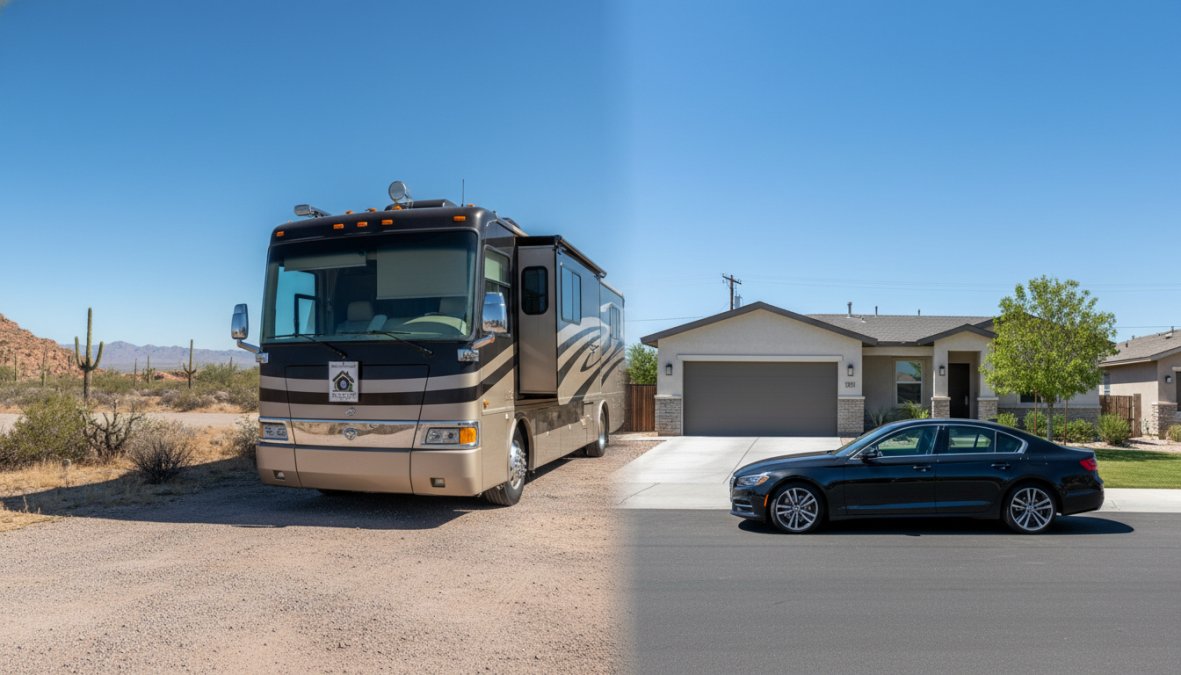
Your personal auto policy typically extends liability coverage while the RV is in motion, and stops there. The moment your recreational vehicle becomes a stationary living space, your auto policy effectively goes dark.
What a Standard Auto Policy Actually Covers on an RV
Auto policies cover bodily injury and property damage liability while driving, collision damage, and comprehensive perils like theft or hail. For a towed travel trailer, your tow vehicle’s policy may extend some liability, but the trailer itself typically needs its own policy for physical damage coverage.
The critical limitation: auto policies carry no provisions for personal property stored inside, no campsite liability when a visitor trips over your awning stake, and no emergency expense coverage if your motorhome breaks down 400 miles from Las Vegas.
Coverage Gaps That Can Cost You Thousands
A standard auto policy will not cover:
- Personal belongings stored inside the RV (electronics, clothing, camping gear)
- Liability for injuries that occur at your campsite while parked
- Emergency lodging and food costs if your RV becomes uninhabitable mid-trip
- Permanent attachments like awnings, satellite dishes, or solar panels
- Full replacement cost, most auto policies settle at actual cash value after depreciation
That last point stings hardest on a depreciated motorhome, leaving you thousands short of replacing it.
Never assume your auto policy covers your RV at a campsite. The liability gap while parked is one of the most common and costly coverage mistakes RV owners make, a single slip-and-fall at your campsite could result in an uncovered lawsuit.
What RV Insurance Covers That Auto Insurance Does Not
RV-specific policies are built around the reality that a recreational vehicle is used in ways no car ever is.
Campsite Liability and Vacation Liability Protection
Vacation liability protects you when someone is injured at your campsite while your RV is parked, a standard feature of dedicated RV policies and completely absent from auto insurance. If a guest trips over your leveling blocks or is injured by your awning, vacation liability covers the resulting claims. For full-time RVers, this coverage functions similarly to the liability section of a homeowners policy.
Personal Property, Emergency Expense, and Towing Coverage
RV policies cover the contents of your vehicle as personal property, something no auto policy provides. Specialty providers like Good Sam Insurance Agency include automatic personal effects coverage as a standard feature, protecting laptops, cameras, and outdoor equipment stored inside.
Emergency expense coverage pays for lodging and meals if your motorhome breaks down more than a set distance from home. Towing a 40-foot Class A also requires specialized equipment that standard auto roadside plans cannot dispatch.
According to the Insurance Information Institute’s guidance on specialty vehicle coverage, personal property and emergency expense coverage are among the most frequently overlooked gaps when RV owners rely on standard auto policies.
When shopping for RV coverage, ask specifically about the emergency expense allowance distance threshold. Some policies activate at 50 miles from home; others require 100 miles. For Las Vegas residents traveling to remote Nevada and Utah destinations, a lower threshold matters.
Full-Timer RV Insurance: Coverage for Your Home on Wheels
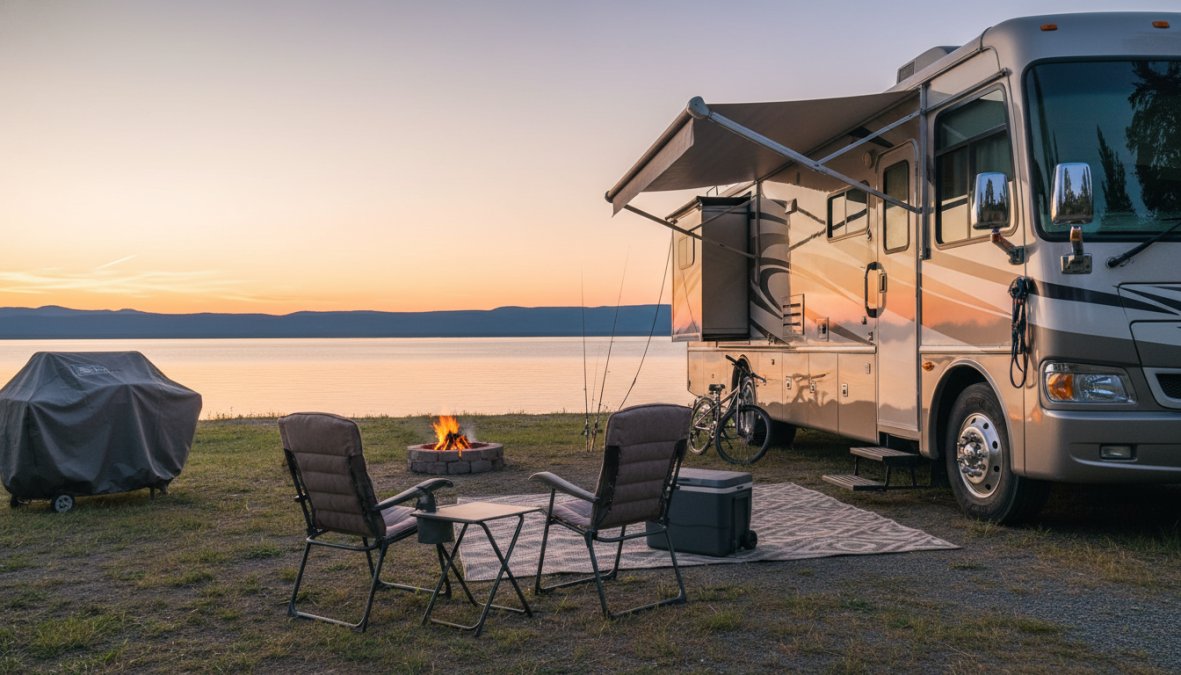
Full-timer RV insurance is a specialized policy category for people who use their recreational vehicle as a primary or permanent residence.
How Full-Timer Policies Blend Auto and Homeowners Protection
Full-timer RV insurance bridges the gap by combining the liability structure of a homeowners policy with the vehicle coverage of an auto policy. Full-timer policies typically include:
- Liability coverage that functions like homeowners liability, protecting against claims at your campsite or RV park
- Loss of use coverage providing alternative housing costs while your RV is repaired
- Medical payments coverage for guests injured in or around your vehicle regardless of fault
- Personal property coverage at replacement cost rather than actual cash value
Progressive RV Insurance offers dedicated full-timer liability coverage as a policy add-on specifically for those using their RV as a primary residence.
The distinction between agreed value and actual cash value is especially important for full-timers. Agreed value means the insurer pays the pre-set amount in full at total loss with no depreciation. Actual cash value pays the depreciated market value, which for an older motorhome can be far less than replacement cost. Full-timers should insist on agreed value or total-loss replacement coverage.
Does Auto Insurance Cover RV Rentals? What Renters Need to Know
Auto insurance does not cover RV rentals in any meaningful way. Your personal auto policy’s liability coverage may technically extend in some states, but physical damage to the rental unit itself is almost never covered. The damage waiver offered at the rental counter covers the vehicle’s physical damage but typically excludes personal property inside and campsite liability.
Renters have three realistic options: purchase the rental company’s damage protection plan, verify whether their credit card provides rental vehicle coverage (most cards exclude RVs explicitly), or purchase a short-term RV rental policy. National General RV Insurance is one provider that explicitly allows rental use. If you are renting an RV near Las Vegas for a trip to Valley of Fire or Great Basin National Park, confirm your coverage before you leave the lot.
If you rent an RV, assume your existing auto insurance provides no meaningful protection for the vehicle itself. Purchase the rental company’s damage waiver or a short-term specialty policy, the exposure is too significant to leave uncovered.
RV Insurance Requirements by State: A Practical Overview
RV insurance requirements by state vary considerably, and Nevada has specific minimums every Las Vegas-area RV owner should understand.
As documented in Nevada DMV’s vehicle insurance requirements, Nevada requires minimum liability coverage for any motorized vehicle operated on public roads. Travel trailers are not independently required to carry liability insurance in Nevada, but that does not mean they are covered.
Minimum Liability Rules and What They Leave Unprotected
Nevada’s state minimum liability limits are among the lower thresholds nationally. A serious accident involving a Class A motorhome can generate claims that exceed minimum limits by multiples. States with high RV traffic, Nevada, Arizona, Florida, California, actively enforce vehicle insurance requirements at campgrounds and border checkpoints.
What state minimums never cover:
- Physical damage to your own RV (collision or comprehensive)
- Personal property inside the vehicle
- Campsite liability while parked
- Uninsured motorist protection (required separately in some states)
Uninsured motorist coverage is worth adding regardless of state requirements. According to the Insurance Research Council’s findings on uninsured drivers, a meaningful share of drivers carry no insurance at all, and an accident with one can leave you absorbing the full cost of repairs to a six-figure vehicle.
Storage vs Active Usage Premiums and DIY Van Conversion Coverage
The premium you pay for RV insurance is not fixed across the calendar year, and smart policyholders find real savings here.
How Seasonal Storage Coverage Can Lower Your Premium
Storage coverage suspends active-use coverages (liability, collision, emergency expense) while retaining comprehensive protection for a parked vehicle. If your RV sits in storage for four to six months, storage mode can reduce your premium significantly. Good Sam Insurance Agency and National General both offer storage options as standard policy features.
The practical rule: switch to storage coverage the day you park for the season, and switch back before you move it. Driving on storage-only coverage voids your liability protection immediately.
Insurance Implications of DIY Van Conversion Coverage
A converted cargo van with a custom interior, solar system, and built-in cabinetry is not the same vehicle it was when it left the factory, and standard auto policies do not reflect that. If the vehicle is totaled, the auto policy pays market value for a used cargo van, not the cost of rebuilding the conversion. National General offers specialized equipment coverage for solar panels, custom wheels, and suspension modifications.
A common mistake is listing a converted van under a standard auto policy without disclosing the conversion. Insurers can deny claims on grounds of material misrepresentation if the vehicle’s use and configuration were not accurately disclosed at underwriting.
How to Choose the Right RV Insurance vs Auto Insurance Coverage for Your Situation
Choosing between policy types comes down to three variables: how you use the RV, how much it is worth, and how much risk you carry at campsites. The right rv insurance vs auto insurance coverage for a weekend warrior with a small travel trailer looks nothing like the right policy for a full-timer in a Class A motorhome.
Key Factors That Affect Your RV Insurance Premium
Several underwriting factors shape what you will pay:
- RV type and class: Class A motorhomes carry higher premiums than travel trailers or Class B campervans
- Vehicle age and condition: Older RVs may face stricter underwriting requirements
- Usage frequency: Full-timers pay more than seasonal users
- Storage location: Covered, secured storage lowers comprehensive premiums
- Driving history: Your auto driving record directly affects RV premiums
- Deductible level: Higher deductibles lower premiums but increase out-of-pocket exposure at claim time
- Coverage selections: Agreed value costs more than actual cash value but pays significantly more at total loss
At United Family Insurance, our agents compare the market across multiple carriers to find the right combination of coverage and premium for your specific situation, whether you are insuring a converted van, a travel trailer, or a full-time motorhome.
Agreed Value vs Actual Cash Value: Which Insured Value Is Better
Agreed value is the superior choice for most RV owners, particularly those with newer or high-value vehicles. A total loss pays the agreed amount in full with no depreciation deduction. Actual cash value pays the market value at the time of the claim, accounting for depreciation, for a five-year-old motorhome, the difference at total loss can run into tens of thousands of dollars. Total-loss replacement cost coverage, a third option from some specialty carriers, pays the cost of a comparable new replacement vehicle, making it the strongest protection for newer RVs.
| Coverage Type | How Loss Is Settled | Best For | Cost |
|---|---|---|---|
| Agreed Value | Pre-set amount, no depreciation | High-value or full-time RVs | Higher premium |
| Actual Cash Value | Market value minus depreciation | Older, lower-value RVs | Lower premium |
| Total-Loss Replacement | Cost of comparable new vehicle | New RVs within first 3-5 years | Highest premium |
| Storage Only | Comprehensive perils only | Off-season, parked vehicles | Lowest premium |
Match your situation to the coverage type, not the lowest premium. A cheaper policy that settles at depreciated value can leave a full-time RVer without adequate funds to replace their home.
If you are unsure whether agreed value or actual cash value is right for your RV, ask your agent to run both quotes side by side. The premium difference is often smaller than expected, and the coverage difference at total loss is almost always significant.
For Las Vegas-area RV owners looking for a starting point on coverage options near me, the National Association of Insurance Commissioners’ consumer resources provides state-specific guidance on policy types and minimum requirements that applies directly to Nevada residents.
Choosing the wrong policy type for your recreational vehicle is a costly mistake that plays out at the worst possible moment. United Family Insurance compares the market on your behalf, giving you access to multiple carriers and coverage structures without the legwork of shopping each one individually. Our agents provide expert guidance on agreed value versus actual cash value, full-timer endorsements, storage coverage, and DIY conversion policies, backed by a user-friendly claims platform when you need it most. Get a quote from United Family Insurance and find the RV coverage that actually matches how you live and travel.
Frequently Asked Questions
Does my auto insurance cover my RV?
A standard auto policy may extend basic liability coverage to a towable travel trailer while it is attached to your vehicle, but it typically stops there. It will not cover campsite liability, personal property inside the RV, emergency lodging expenses, or the recreational vehicle itself if it is damaged while parked. A dedicated RV insurance policy is needed to close those gaps and properly protect your motorhome or trailer.
What is full-timer RV insurance and who needs it?
Full-timer RV insurance is a specialized policy designed for people who use their recreational vehicle as a primary residence rather than for occasional trips. Because a standard auto policy treats an RV as a vehicle, not a home, it excludes liability protection similar to a homeowners policy. Full-timer coverage adds personal liability, loss-of-use benefits, and personal property protection that reflects the reality of living in the RV year-round. Anyone spending more than roughly six months per year in their RV should consider it.
Does auto insurance cover RV rentals?
Generally, no. Most personal auto policies exclude rental motorhomes and travel trailers from coverage. Some credit card travel benefits may offer limited protection, but they rarely cover the full replacement cost or liability exposure of a rented recreational vehicle. The rental company will typically offer its own collision and liability endorsements, and you can also purchase a short-term RV policy. Always confirm your existing coverage before declining rental protection.
Is RV insurance required by law?
RV insurance requirements by state vary, but most states require at minimum liability coverage for motorhomes because they are self-propelled vehicles registered on public roads. The required bodily injury and property damage limits differ by state. Towable trailers have fewer mandatory requirements in many states, though liability still applies when attached to your tow vehicle. Regardless of legal minimums, carrying only the state minimum leaves significant financial exposure, making comprehensive and collision coverage strongly advisable.
How much does RV insurance cost compared to car insurance?
RV insurance premiums vary widely based on the type of recreational vehicle, how often it is used, where it is stored, and the coverage options selected. A basic liability-only policy for a travel trailer can be relatively affordable, while a comprehensive policy for a high-value Class A motorhome used full-time will cost considerably more. Factors like agreed value versus actual cash value, deductible level, and endorsements for personal property or towing and roadside assistance all influence the final premium.
Can I add an RV to my personal auto policy?
Some insurers allow you to add a travel trailer or small camper as an endorsement to your existing auto policy, but the coverage is usually limited to basic liability while the trailer is hitched. Motorhomes, large fifth wheels, and vehicles used as a full-time residence almost always require a separate dedicated RV insurance policy to receive adequate protection, including comprehensive coverage, collision coverage, campsite liability, and personal property coverage for belongings kept inside.