

Table of Contents
- What Is Home Bakery Insurance and Why You Need It
- Understanding Nevada Cottage Food Law Requirements
- Types of Coverage for Your Home-Based Bakery
- Home Bakery Business Insurance Cost in Las Vegas
- Coverage for Farmers Markets and Pop-Up Events
- How to Get a Quote for Your Home Bakery Insurance
- Common Mistakes to Avoid When Insuring Your Bakery
- Getting Started With Your Insurance Plan
How to Insure a Home-Based Bakery in Las Vegas
Last Updated: August 3, 2026
Learning how to insure a home-based bakery in Las Vegas requires understanding Nevada’s cottage food laws and commercial insurance requirements. Many home bakers operate without realizing they need specific coverage beyond their homeowners policy. At United Family Insurance, we help home-based business owners navigate these requirements to protect their operations while staying compliant with local regulations.
What Is Home Bakery Insurance and Why You Need It
Home bakery insurance is specialized commercial coverage that protects your baking business from liability, property damage, and product-related claims. Unlike standard homeowners insurance, which explicitly excludes business activities, home bakery insurance bridges the gap between personal and commercial protection. This coverage becomes essential the moment you start selling baked goods.
A standard homeowners policy will deny any claim related to your business operations, including injuries during baking or illness traced to your products. If a customer gets foodborne illness from your cookies or a delivery driver slips on your driveway while picking up an order, your homeowners insurance will refuse to cover it. Commercial coverage steps in where homeowners insurance stops.
The difference between homeowners and commercial coverage
Homeowners insurance protects your personal residence and belongings. The moment you use part of your home for business purposes, you’ve created a liability exposure that homeowners policies explicitly exclude. Commercial policies are designed to cover business-related activities, including product liability, general liability for third-party injuries, and property damage related to your business operations.
Many home bakers think a simple endorsement to their homeowners policy will suffice. That approach creates a false sense of security. Endorsements have strict limits and often don’t cover product liability, the risk that your baked goods cause illness or injury. A dedicated home bakery insurance policy provides comprehensive protection tailored to your actual risk profile.
Understanding Nevada Cottage Food Law Requirements
Nevada’s cottage food operation law allows certain foods to be prepared in a home kitchen without a commercial license. However, this exemption comes with specific restrictions that directly affect your insurance needs.
What products qualify under Nevada law
Nevada permits home-based preparation of certain non-potentially hazardous foods under its Domestic Kitchen Operation (DKO) law. Allowed products include baked goods (breads, cookies, cakes, pastries), jams, jellies, dried herbs, granola, and certain candies. Prohibited items include foods requiring refrigeration, foods with cream cheese frosting, and anything with meat or seafood.
Every product must include your name, address, the product name, ingredients, and a statement that the product was "made in a home kitchen that is not subject to state licensing or inspection." This labeling requirement demonstrates you’re operating within the law, which strengthens your insurance position if a claim arises.
Insurance implications of cottage food operations
Operating under Nevada’s cottage food exemption doesn’t eliminate the need for insurance; it changes your coverage requirements. Because you’re not licensed by the health department, you have less regulatory oversight but potentially higher liability exposure. Insurance companies view unlicensed operations as higher-risk, which affects both your premium and the specific endorsements you’ll need.
Many insurers require that home bakery businesses operating under the DKO exemption carry product liability coverage with minimum limits of $1 million per occurrence. Some insurers also require proof that you’re complying with Nevada’s labeling requirements and that you’re only producing allowed foods.

Types of Coverage for Your Home-Based Bakery
Protecting your home-based bakery requires layering multiple types of coverage. Each addresses a different risk.
General liability insurance explained
General liability insurance covers bodily injury and property damage claims caused by your business operations. If a customer visits your home to pick up an order and slips on your driveway, general liability covers their medical expenses and legal costs. If your delivery vehicle damages someone’s property, general liability steps in. This coverage typically includes legal defense costs, which can exceed $10,000 even for frivolous claims.
General liability policies for home bakeries usually start with coverage limits of $1 million per occurrence and $2 million aggregate. The per-occurrence limit is what the policy pays for a single incident. The aggregate limit is the total the policy will pay across all claims in a year.
Product liability coverage for baked goods
Product liability insurance specifically covers claims that your baked goods caused illness, injury, or property damage. If a customer claims they got food poisoning from your brownies or an allergic reaction from unlabeled nuts, product liability covers their medical costs and any legal judgment against you. This coverage is essential for any food business, even small home operations.
Product liability for bakers typically covers foodborne illness, allergic reactions, and foreign objects found in food. Many insurers require that home bakery operations maintain product liability limits of at least $1 million per occurrence.
Commercial property and equipment protection
Your baking equipment, mixers, ovens, scales, cooling racks, represents a significant investment. Commercial property coverage protects these assets against fire, theft, and other covered perils. If your oven fails due to an electrical fire, property coverage helps you replace it.
For home-based bakeries, property coverage typically covers equipment, ingredients, and finished goods inventory. Coverage limits should reflect the actual replacement cost of your equipment. A commercial-grade mixer alone can cost $3,000 to $5,000. Add ovens, proofing boxes, and specialty pans, and your equipment value quickly reaches $10,000 or more.
| Coverage Type | What It Covers | Why It Matters |
|---|---|---|
| General Liability | Customer injuries, property damage | Protects against slip-and-fall claims, delivery accidents |
| Product Liability | Foodborne illness, allergic reactions | Covers claims your products caused harm |
| Commercial Property | Equipment, ingredients, finished goods | Replaces baking equipment if damaged or stolen |
| Business Interruption | Lost income during forced closure | Covers revenue loss if health department closes you |
Home Bakery Business Insurance Cost in Las Vegas
Insurance costs for home-based bakeries vary based on several factors specific to your operation.
What affects your premium and deductible
Your annual revenue is the primary driver, higher sales volume means higher premiums because you’re serving more customers and creating more exposure. Your product mix also matters. Operations selling only shelf-stable items have lower premiums than those selling items with refrigerated components.
Your business location and whether you deliver also affect pricing. Operating solely from your home with customer pickups carries less risk than delivering products across Las Vegas. The number of locations where you sell, farmers markets, pop-up events, online sales, increases your exposure and your premium. Your loss history matters too. A clean claims history can qualify you for discounts.
Your deductible, the amount you pay out-of-pocket before insurance kicks in, directly affects your premium. Choosing a $1,000 deductible instead of $500 lowers your annual premium. Most home bakers choose deductibles between $500 and $1,000, balancing affordability with manageable out-of-pocket exposure.
Business Owner’s Policy options
A Business Owner’s Policy (BOP) bundles general liability, commercial property, and business interruption coverage into a single package. For home-based bakeries, a BOP is often the most cost-effective approach because bundling reduces the overall premium compared to purchasing coverages separately.
Many BOPs designed for home-based food businesses include coverage for farmers market and pop-up event sales, though this sometimes requires an additional endorsement. Some insurers offer discounts if you complete food safety training or maintain specific hygiene certifications.
Coverage for Farmers Markets and Pop-Up Events
Selling at farmers markets or pop-up events introduces additional liability exposure that requires specific coverage considerations. Your home bakery insurance must explicitly extend to these temporary locations.
Event-specific liability protection
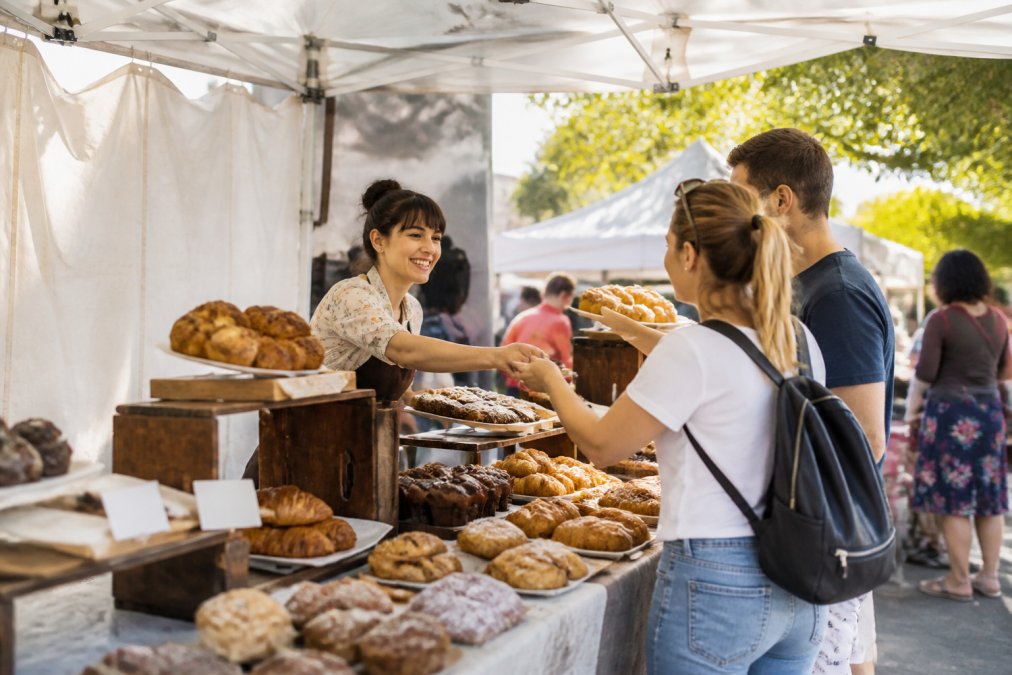
When you sell at a farmers market or pop-up event, you’re operating in a public space where foot traffic is heavy and liability exposure increases. Your standard home bakery policy may not automatically cover these locations. Many insurers require an endorsement or rider that specifically adds farmers market and event coverage to your policy.
Event coverage usually includes liability for injuries at your booth, claims related to products sold at the event, and property damage you cause at the venue. Before committing to a farmers market or pop-up event, contact your insurer to confirm your policy covers that specific location and get documentation of your coverage in writing.
Delivery and transport insurance needs
Delivering baked goods across Las Vegas introduces another layer of liability. If you’re using your personal vehicle to deliver orders, your auto insurance likely excludes business use. You need commercial auto coverage or a commercial endorsement to your personal auto policy that covers business deliveries.
Product liability coverage typically extends to products in transit, but only if they’re being transported to the customer. Once delivered, the customer assumes responsibility for storage and handling. Make sure your policy explicitly covers delivery and transport.
How to Get a Quote for Your Home Bakery Insurance
Getting an accurate quote requires providing insurers with detailed information about your operation.
Information you’ll need to gather
Document your annual revenue from baking sales. Have your tax returns or sales records available. Document what products you make and their ingredients, especially noting whether any contain common allergens. List all your baking equipment and estimate its replacement cost. Note whether you deliver products or only allow customer pickups, and identify all locations where you sell.
Prepare information about your home’s kitchen setup. Document any food safety training or certifications you’ve completed. Have your Nevada business license or DKO registration available if you’ve registered with the state. Finally, document your claims history.
Comparing quotes and coverage options
Contact at least three insurers who specialize in home-based food businesses. United Family Insurance can help compare multiple carriers on your behalf, which saves time and ensures you’re getting competitive rates. When requesting quotes, provide identical information to each insurer so you can accurately compare pricing and coverage.
As you review quotes, pay attention to what’s included in each policy. Compare the specific coverage limits offered, a $500,000 product liability limit is less protection than $1 million. Look at what endorsements are available and their costs. Ask each insurer about discounts for food safety training, multiple policies, or claims-free history.
Common Mistakes to Avoid When Insuring Your Bakery
Home bakers often make predictable insurance mistakes that leave them exposed to significant financial risk.
A common mistake is assuming your homeowners insurance covers your baking business. It doesn’t. Most homeowners policies explicitly exclude business activities. Another frequent error is underestimating your equipment value. Bakers often carry property coverage limits that are too low to actually replace their equipment if something happens.
Many home bakers fail to extend their coverage to farmers markets and pop-up events. They purchase a home-based bakery policy, then sell at a farmers market without confirming their policy covers that location. Similarly, some bakers don’t account for delivery in their coverage. If you’re delivering products and cause an accident, standard homeowners auto insurance won’t cover it.
Another mistake is choosing inadequate coverage limits to save on premiums. While a $250,000 product liability limit costs less than $1 million in coverage, it may not be enough if a serious foodborne illness claim occurs. Finally, some bakers fail to maintain compliance with Nevada’s cottage food laws while carrying insurance. If you’re selling products that aren’t allowed under the DKO exemption, your insurer may have grounds to deny claims.
Getting Started With Your Insurance Plan
Securing insurance for your home-based bakery is straightforward once you understand what coverage you need. Start by documenting your operation, products, equipment, locations where you sell, and annual revenue. Then contact insurers who specialize in home-based food businesses. Request quotes for a Business Owner’s Policy that includes general liability, product liability, and commercial property coverage.
As you evaluate quotes, prioritize insurers who understand Nevada’s cottage food laws and have experience with home-based bakeries. Ask about endorsements for farmers market and delivery coverage. Confirm that your policy covers all locations where you currently sell and plan to sell in the future. Once you’ve selected a policy, review it carefully before signing.
Protecting your home-based bakery requires more than hoping nothing goes wrong. The right insurance coverage shields your business from the financial devastation of a liability claim while ensuring you’re operating legally in Nevada. United Family Insurance specializes in connecting home-based business owners with comprehensive commercial coverage tailored to their specific needs. Our agents compare multiple carriers on your behalf, ensuring you get the right coverage at competitive rates. Get a quote today and discover how much you can save while securing complete protection for your baking business.
Frequently Asked Questions
Do I need home bakery insurance if I operate under Nevada's Cottage Food Law?
Yes. While Nevada's Cottage Food Law allows certain foods to be made in home kitchens without a commercial license, liability protection remains critical. Even though some products may be exempt from licensing, you're still responsible if someone becomes ill or is injured due to your product. Product liability and general liability coverage protect your personal assets in case of claims. Your homeowners insurance typically excludes business activities, so commercial coverage is essential.
What's the difference between product liability and general liability for a home bakery?
General liability insurance covers third-party bodily injury or property damage that occurs on your property or due to your business operations (like someone slipping in your kitchen). Product liability covers injuries or illnesses caused by your baked goods themselves, such as foodborne illness or allergic reactions. Both are essential for home-based bakeries. A Business Owner's Policy typically bundles these together, providing comprehensive protection for your home bakery business.
What information do I need to get an accurate quote for home bakery insurance?
Gather details about your annual revenue, types of products you bake, whether you sell at farmers markets or deliver directly to customers, your baking equipment value, and any food safety certifications you hold. Provide your home's square footage and whether you have a dedicated commercial kitchen area. Include information about aggregate limits and per occurrence limits you're considering. The more specific your information, the more accurate your quote will be.
Can I add home bakery coverage to my existing homeowners policy?
Most homeowners policies exclude business activities, so you cannot simply add bakery coverage to an existing home policy. Instead, you'll need a commercial endorsement or a separate Business Owner's Policy. Some insurers offer home-based business endorsements that extend coverage for specific business operations, but this varies by provider. A dedicated home bakery policy or BOP provides better protection and typically costs less than trying to modify residential coverage.