

Table of Contents
- Step 1: Stop the Water and Document the Damage
- Step 2: Review Your Homeowners Insurance Water Damage Coverage
- Step 3: Notify Your Insurer and Understand the Water Damage Insurance Claim Timeline
- Step 4: Complete a Water Damage Claim Checklist
- Step 5: What to Say to an Insurance Adjuster About Water Damage
- Step 6: Handle Delays, Denials, and Underpaid Claims
- Conclusion: Protect Your Home and Your Claim
- Frequently Asked Questions
Last Updated: October 13, 2026
Step 1: Stop the Water and Document the Damage
Knowing how to file a water damage insurance claim starts with two urgent moves: stop the water and capture proof before anything gets cleaned up. Insurers pay based on evidence, and evidence disappears fast once towels and fans come out.
Water damage claims are among the most common homeowners insurance claims in the country. The Insurance Information Institute tracks claim frequency and severity data each year at Insurance Information Institute research on homeowners claims, and the pattern holds: fast action and clean documentation separate smooth claims from disputed ones.
Shut Off the Main Valve and Call a Professional
Find your main water shut-off valve before you need it. In most Las Vegas homes it sits near the street, in a utility box, or where the main line enters the house.
Turn it clockwise until the water stops. Then:
- Open a low faucet to drain remaining water from the pipes
- Kill power to any wet rooms at the breaker box, but only if you can reach it safely
- Call a licensed plumber to find and fix the source
Never stand in standing water near outlets or appliances. That is a shock risk, not a plumbing problem.
Photograph Everything Before You Clean Up
Your phone is your best claims tool. Take wide shots of each room, then close-ups of the source, the water line on walls, and every damaged item. Shoot video too: walk slowly through the space and narrate what you see, creating a timestamped record of the loss date and scope.
Throwing out soggy carpet or boxes before photographing them is a common mistake. Once it is in the dumpster, the adjuster cannot verify it, and that portion of your claim often gets denied.
Step 2: Review Your Homeowners Insurance Water Damage Coverage
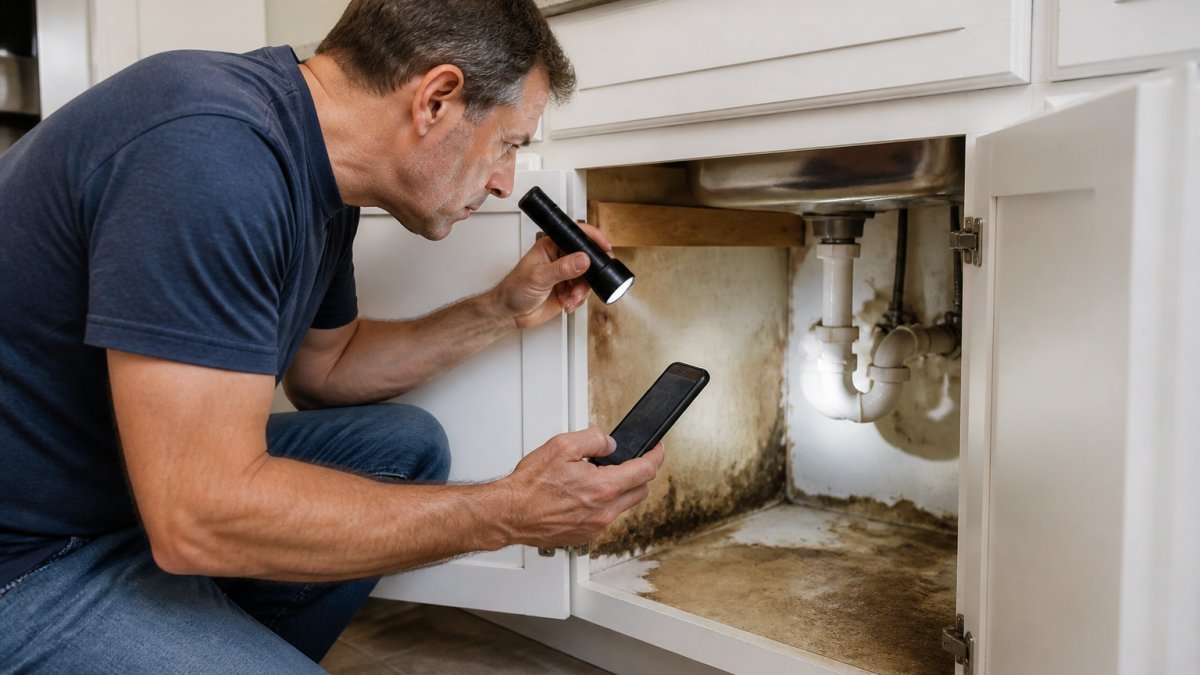
Homeowners insurance water damage coverage usually pays for sudden and accidental damage, a burst pipe, a failed water heater, an overflowing washing machine supply line. It typically excludes gradual leaks, poor maintenance, and flooding. That distinction decides your whole claim, so read your policy first.
The HO-3 Form Is What Most Las Vegas Homeowners Actually Have
Most single-family policies in Las Vegas are written on an HO-3 special form, under which:
- The dwelling (Coverage A) is open-peril, anything not specifically excluded is covered.
- Personal property (Coverage C) is usually named-peril, only listed perils are covered.
- Sudden internal water damage is generally covered under both; seepage, repeated leakage, and constant or repeated slow release of water over 14 days or more are commonly excluded.
That 14-day language comes from the ISO HO-3 exclusion wording, which bars loss from “constant or repeated seepage or leakage of water… over a period of 14 or more days.” If your leak started three weeks ago and you only noticed it when the ceiling stained, expect the adjuster to test that timeline.
Water Damage vs. Flood: Two Different Policies, Two Different Claims
This is the single most expensive misunderstanding in home insurance. A standard homeowners policy does not cover:
- Rising surface water (street flooding, washes, monsoon runoff)
- Storm surge
- Groundwater seeping up through a slab
Those are flood, and flood coverage comes from a separate policy, most commonly through FEMA’s National Flood Insurance Program (NFIP), or through a private flood carrier. The NFIP publishes coverage details, waiting periods, and claim guidance at FEMA National Flood Insurance Program.
A critical Las Vegas detail: NFIP policies generally have a 30-day waiting period before coverage takes effect. You cannot buy flood insurance the day a monsoon is forecast and expect it to respond.
| Loss Type | Usually Covered by Homeowners? | Where to File |
|---|---|---|
| Burst pipe inside a wall | Yes | Homeowners policy |
| Failed water heater (sudden) | Yes | Homeowners policy |
| Washing machine supply line failure | Yes | Homeowners policy |
| Slow leak under sink over weeks | Often no (seepage exclusion) | Out of pocket |
| Roof leak from monsoon rain | Depends, see below | Homeowners or flood |
| Rising flood water / wash runoff | No | Separate flood policy (NFIP or private) |
| Groundwater through slab | No | Separate flood policy |
The Roof Leak Gray Zone
A monsoon-driven roof leak is the most argued-about water claim in Southern Nevada. If rain enters through a sudden opening, a wind-torn shingle, a fallen branch, many carriers treat it as a covered wind peril followed by water damage. If rain enters through a roof already worn out and needing replacement, the carrier will point to the maintenance exclusion and deny.
Three Numbers to Highlight Before You Call
Open your declarations page and highlight:
- Your deductible, including any separate wind/hail or water-backup deductible, often higher than the base deductible.
- Coverage A and Coverage C limits, and whether Coverage A is replacement cost or actual cash value. ACV pays depreciated value; replacement cost pays what it costs to rebuild today.
- Every water-related exclusion, seepage, mold, water backup, flood, and ordinance-or-law (which covers code upgrades required during repair).
Water backup coverage deserves its own line. If a sewer line or sump backed up into your home, the base HO-3 usually excludes it, you need a water backup endorsement, typically an add-on with a sublimit. Many Las Vegas homeowners discover this only after the loss.
The word that decides most water claims is “sudden.” If the damage built up over weeks, expect a fight. If it happened in hours, your policy likely responds. And if the water came from outside the home, stop reading your homeowners policy and go find your flood policy.
Step 3: Notify Your Insurer and Understand the Water Damage Insurance Claim Timeline
The water damage insurance claim timeline starts the moment you report the loss.
Most policies require prompt notice. Waiting can give an insurer grounds to reduce or deny your claim, so report it even if you are still drying things out.
Here is how the process usually unfolds:
- Report the loss. Get your claim number and the adjuster’s contact info.
- Inspection. An adjuster visits, often within a few days.
- Damage assessment. You receive a scope of repairs and a repair estimate.
- Settlement offer. The insurer proposes a payout.
- Payment. Funds arrive after you agree or negotiate.
Timelines vary by insurer and claim size. Ask your adjuster for expected dates in writing, and follow up if a deadline slips.
Step 4: Complete a Water Damage Claim Checklist
A water damage claim checklist keeps you from missing documents that delay payment, but a bare list is not enough, you need a system. Build one folder (digital or paper) and add to it daily. Below is a toolkit, including templates most guides skip.
The Core Claim File
- Claim number and adjuster name, phone, and email
- Date and time you discovered the loss
- Photos and video of every affected room
Template 1: Room-by-Room Photo Log
Do not dump 400 photos into your camera roll. Create a simple log so the adjuster can follow your evidence. For each room, record:
| Field | Example |
|---|---|
| Room | Primary bathroom |
| Date/time photographed | Oct 12, 2026, 7:40 a.m. |
| Source of water | Supply line under vanity |
| Water line height | 4 inches up the baseboard |
| Affected materials | Vinyl floor, drywall, vanity cabinet |
| Photo file names | IMG_4471 through IMG_4492 |
This log proves the scope of damage and the date of loss, the fact insurers scrutinize most when seepage exclusions are in play.
Template 2: Personal Property Inventory
For each damaged item, capture five columns:
- Item, be specific (“55-inch Samsung TV, model QN55Q60C”)
- Room, where it was located
- Approximate age, when you bought it
- Proof of ownership, receipt, bank statement, credit card statement, or photo
- Replacement cost, current retail price for a comparable item
Proof of ownership matters more than people expect. If you cannot show you owned the TV, the insurer may pay a token amount or nothing. A credit card statement showing the purchase is often enough.
Template 3: Receipt Tracker for Mitigation and Loss of Use
Keep every receipt for hotel stays, meals, pet boarding, laundry, and supplies if your home is uninhabitable. Many policies reimburse these under loss of use (Coverage D). Track them in one place:
| Date | Vendor | Category | Amount | Paid By | Reimbursable? |
|---|---|---|---|---|---|
| Oct 12 | Servpro of Henderson | Water extraction | $1,850 | Credit card | Yes, mitigation |
| Oct 12-15 | Hampton Inn | Lodging | $420 | Credit card | Yes, loss of use |
Coordinating Mitigation Contractors With Your Insurer
This is where most DIY claim files fall apart. You have a duty to mitigate, to prevent further damage, but the insurer also needs to see the damage before it is gone. A practical sequence:
- Photograph and video everything first. Wide shots, then close-ups, then a narrated walkthrough.
- Call a licensed water restoration company to extract standing water and set drying equipment. In Las Vegas, look for IICRC-certified firms; the Nevada State Contractors Board license lookup at Nevada State Contractors Board license search lets you verify a contractor’s license before they start.
- Tell the restoration company to preserve removed materials, cut-out drywall sections, damaged flooring samples, the failed supply line itself, until the adjuster has seen them. Bag and label them.
- Notify your insurer the same day and give them the restoration company’s name and contact info so the adjuster can coordinate directly.
- Keep the mitigation invoice separate from your repair estimate. Mitigation is usually reimbursed as its own line item, often above and beyond the repair scope.
Do not let a restoration company sign you into an assignment of benefits (AOB) or a “we’ll handle your claim for you” agreement without reading it. Signing over your claim rights can leave you with less control and less money. You can hire a restoration company without assigning your benefits.
A Two-Minute Habit That Saves Claims
Walk through your home with your phone camera once a month and open a few closets and drawers on video. That footage becomes proof of ownership for everything in the house, and it takes two minutes. Do it on the first of the month and you will never again argue about whether you owned something.
Download a printable version of these three templates and keep a copy in your home files. If a loss happens, you will be filling in blanks instead of starting from scratch, and that speed is what keeps a claim on track.
Step 5: What to Say to an Insurance Adjuster About Water Damage
What to say to an insurance adjuster about water damage comes down to one rule: stick to facts you can prove. Describe what happened, when you found it, and what you documented. Nothing more. Adjusters are not your enemy, but they work for the insurer. Keep these habits:
- Answer questions directly and briefly
- Never guess at dates, costs, or causes
- Do not say “it’s been leaking for a while”
If the adjuster’s scope of repairs misses items your contractor listed, say so and send your contractor’s estimate. Disagreements at this stage are normal and fixable.
Step 6: Handle Delays, Denials, and Underpaid Claims
A delayed, denied, or underpaid claim is not the end of the process. Nevada gives policyholders real options. Start with a written request for the specific reason for the denial or delay. Then:
- Send a supplemental claim with new evidence, like a contractor’s estimate or missed damage photos
- Ask for a re-inspection if the adjuster missed areas
- File a complaint with the Nevada Division of Insurance, which regulates carriers in this state and handles consumer disputes. Their complaint process is explained at Nevada Division of Insurance consumer complaint process
Nevada law requires insurers to acknowledge claims and act within set timeframes. If your claim sits for weeks with no response, that alone can justify a complaint.
Signing a final settlement or release before you know the full scope of repairs can cap your payout permanently. Get contractor estimates first, then sign.
Conclusion: Protect Your Home and Your Claim
Water damage rarely waits for a convenient moment, and the paperwork can feel as overwhelming as the water itself. If you are shopping for coverage or want an agent in your corner before the next leak, United Family Insurance compares the market for you, and helps Las Vegas homeowners bundle home and auto for real savings. Our customers regularly tell us the difference is a real person who explains every option clearly.
Frequently Asked Questions
Will insurance companies pay for water damage?
Homeowners insurance typically covers sudden and accidental water damage, like a burst pipe or appliance failure. However, damage from neglected maintenance or flooding is usually excluded. In Las Vegas, where flash floods can occur, standard policies won’t cover floodwater; you’d need separate flood insurance. Review your policy’s covered loss list and exclusions to know exactly what’s protected.
What should you avoid saying to an insurance adjuster about water damage?
Avoid speculating about the cause, using phrases like ‘it’s been leaking for months,’ or admitting fault. Stick to facts: when you noticed the damage, what you did to stop it, and the steps you took to document it. Don’t volunteer opinions about what might have caused the leak. If you’re unsure, say you’ll provide documentation. Being honest but precise helps your water damage claim.
Can you file a homeowners insurance claim for a water leak?
Yes, if the leak was sudden and accidental, such as a pipe bursting. Most homeowners insurance water damage coverage includes leaks from plumbing, HVAC, or appliances. Gradual leaks from poor maintenance are often excluded. File promptly, document everything, and keep receipts for emergency repairs. Your water damage claim timeline starts as soon as you notify your insurer.
How long does a water damage insurance claim take?
The water damage insurance claim timeline varies. Insurers typically acknowledge your claim within days and send an adjuster within a week or two. Settlement can take 30 to 60 days after the adjuster’s inspection, depending on documentation and damage extent. Delays happen if paperwork is missing or if you dispute the settlement. Follow up regularly and keep copies of all correspondence.