

Table of Contents
- What Counts as a Custom Built Motorcycle
- Nevada DMV Custom Motorcycle Registration Requirements
- How to Document Custom Motorcycle Modifications for Insurance
- Coverage Types for Custom Built Motorcycles
- Factors That Affect Your Custom Motorcycle Insurance Premium
- Step-by-Step: Getting a Quote for Your Custom Built Motorcycle
- Common Mistakes to Avoid When Insuring a Custom Build
- Conclusion
Last Updated: August 23, 2026
What Counts as a Custom Built Motorcycle
A custom built motorcycle is either assembled from individual components or so extensively reconstructed that little of the original manufacturer’s work remains. This distinction matters because insurance companies treat custom motorcycles differently than stock bikes, requiring specialized underwriting and documentation proving the bike’s construction and current value.
A modified motorcycle starts as a factory model with aftermarket parts added. A custom built motorcycle, by contrast, features one-of-a-kind frames, hand-fabricated components, significant engine rebuilds, or complete ground-up assembly from individual parts. Insurance companies can’t apply standard valuation guides to custom builds because they lack a factory baseline. They need to understand exactly what you’ve built, how much you’ve invested, and what it would cost to replace if damaged or stolen.
Nevada DMV Custom Motorcycle Registration Requirements
Nevada requires all motorcycles, including custom builds, to be registered with the Nevada Department of Motor Vehicles. Custom motorcycles require additional steps beyond standard registration.
If your custom bike doesn’t have a factory VIN, Nevada allows you to apply for a specially assigned VIN through the DMV. This process requires submitting an application with photographs from multiple angles, proof of ownership of major components, and sometimes an inspection by a DMV official or certified mechanic.
Once you have a VIN assigned, you’ll need to pass a safety inspection. Nevada requires custom motorcycles to meet specific safety standards including functional brakes, lights, horn, and mirrors (dmv.nv.gov). Many motorcycle shops in Las Vegas can perform these inspections. The inspection is documented, and you’ll receive a certificate needed for registration.
Registration requires proof of ownership (bill of sale or fabrication documentation), proof of insurance, and a completed application. Nevada doesn’t require emissions testing for motorcycles (ndep.nv.gov). You’ll need to bring all documentation to a DMV office, as online registration isn’t available for newly constructed vehicles.
Insurance companies will ask for your registration certificate and VIN assignment documentation, proving your custom bike meets Nevada’s safety requirements.
How to Document Custom Motorcycle Modifications for Insurance
Insurance companies won’t issue a quote for a custom motorcycle without detailed documentation. This documentation becomes the foundation of your insurance policy and the reference point for any claims.
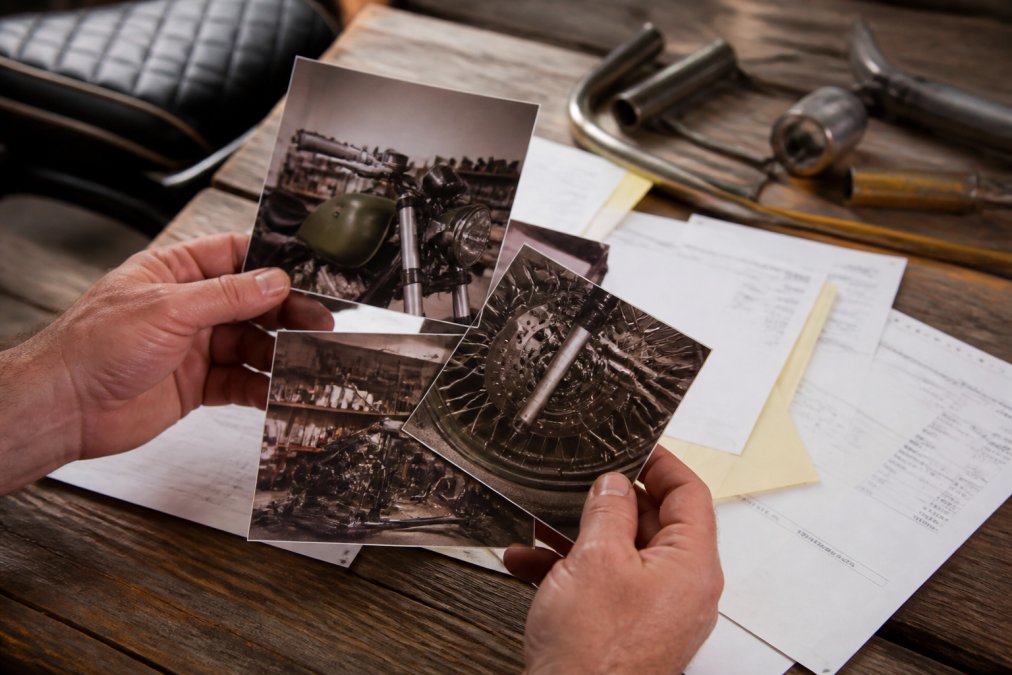
Photograph your motorcycle from every angle, front, rear, both sides, top-down view, and close-ups of custom fabrication work. Include photos of the engine, frame welds, custom paint, and unique components in good daylight lighting.
Collect all receipts and invoices related to your build, including the frame, engine, transmission, wheels, brakes, custom fabrication work, paint, and every aftermarket part. If a shop built it, get an itemized invoice showing all parts and labor costs.
Create a detailed build list describing every major component, including manufacturer, model, and whether components are original, used, or custom-fabricated. Document any custom fabrication work with photos and descriptions from the fabricator showing materials, welding specifications, and any testing performed.
Get a professional appraisal if your bike exceeds $15,000 or more, though this varies by insurer. A motorcycle appraiser will inspect your bike, document all components, and provide a written appraisal establishing the bike’s replacement value.
Keep all documentation organized in a folder, physical or digital. Insurance companies will ask for this documentation when you request a quote and again if you file a claim.
Coverage Types for Custom Built Motorcycles
Custom motorcycles typically need the same basic coverage types as standard motorcycles, but the specifics matter more because your bike’s value is higher and its replacement cost is harder to calculate.
Liability coverage is mandatory in Nevada, paying for injuries or property damage you cause to others if you’re at fault in an accident. Nevada’s minimum is typically $15,000 per person for bodily injury, $30,000 per accident, and $10,000 for property damage (dmv.nv.gov). However, many insurance agents recommend higher limits, $50,000 to $100,000 or more, for custom bike owners.
Collision coverage pays for damage to your motorcycle if you’re in an accident with another vehicle or object, typically with a $500 or $1,000 deductible.
Comprehensive coverage pays for damage from causes other than collision: theft, vandalism, weather, falling objects, or fire. For a custom motorcycle, comprehensive coverage is especially important because custom bikes are theft targets.
Uninsured motorist coverage protects you if you’re hit by a driver without insurance or with inadequate coverage. Nevada requires this coverage.
Agreed Value vs Actual Cash Value Motorcycle Insurance
The biggest difference between standard and custom motorcycle insurance comes down to how your bike’s value is determined.
Agreed value coverage means you and your insurance company agree on your motorcycle’s value when you buy the policy. If your bike is totaled, the insurance company pays that agreed value, regardless of market conditions. For a custom motorcycle, agreed value is almost always better because it reflects the actual cost of your build and quality of fabrication.
Actual cash value coverage determines your bike’s value at the time of a claim based on comparable motorcycles in the current market. For a custom motorcycle, this is problematic because there are no comparable bikes. An insurance company might undervalue your one-of-a-kind build significantly.
For custom motorcycles, agreed value is strongly recommended. It requires an appraisal and documentation, but ensures you’ll be paid what you and your insurer agreed the bike is worth.
Factors That Affect Your Custom Motorcycle Insurance Premium
Your custom motorcycle insurance premium depends on multiple factors. The value of your motorcycle is primary, a $50,000 custom bike costs more to insure than a $20,000 one.
Your riding history matters significantly. A clean record with no accidents or violations results in lower premiums. The type of riding you do affects your premium, daily commuting costs more than occasional weekend rides. Bikes stored in a garage are less likely to be stolen or damaged than those stored outside.
Your age and experience level affect your premium. Younger riders typically pay more than experienced older riders. Performance modifications that increase speed and power might be rated higher than purely aesthetic custom work. Your location in Las Vegas or elsewhere in Nevada affects your premium, with urban areas typically having higher theft rates and accident risk.
Step-by-Step: Getting a Quote for Your Custom Built Motorcycle
Getting an insurance quote for a custom motorcycle requires preparation, but the process is straightforward once you have your documentation ready.

Step 1: Gather Your Documentation
Compile photos from multiple angles, receipts for all major components and custom work, a detailed build list, your Nevada motorcycle registration and VIN assignment documentation, and your motorcycle’s appraisal if you’ve had one done. If your bike is worth more than $15,000, get an appraisal before requesting quotes.
Step 2: Contact Insurance Agents Near You
Call or visit insurance agencies in Las Vegas that specialize in motorcycle insurance. Some agencies work with multiple carriers and can compare quotes from different companies.
Step 3: Provide Detailed Information
Describe your motorcycle in detail, explaining that it’s a custom build. Describe the frame, engine, transmission, and major custom components. Share your documentation, photos, and build information.
Step 4: Discuss Coverage Options
Work with your agent to determine the right coverage. Discuss agreed value versus actual cash value, liability limits, and collision and comprehensive deductibles.
Step 5: Get Written Quotes
Ask for written quotes from at least two or three insurance companies. Compare coverage types, limits, deductibles, and premiums side by side.
Step 6: Ask About Discounts
Ask about available discounts for safety courses, bundling policies, low mileage, garage storage, or multiple motorcycles.
Step 7: Review and Choose
Review quotes carefully, understanding what each policy covers and what deductibles apply. Once you’ve chosen, your agent will help complete the application.
Step 8: Keep Your Documentation Updated
If you make modifications or add custom components, notify your insurance company. If your bike’s value changes significantly, adjust your agreed value coverage.
Common Mistakes to Avoid When Insuring a Custom Build
The biggest mistake is underestimating your motorcycle’s value. Without careful cost tracking, you’ll guess at total investment, resulting in lower premiums but inadequate coverage. Get a professional appraisal if your bike is worth more than $15,000.
Another common mistake is not documenting your build. Keep receipts for all components and custom work. Take photos of your build process. Document any custom fabrication work with descriptions and photos.
Many custom bike owners choose actual cash value coverage instead of agreed value, thinking they’re saving money. They’re actually taking on risk, if your bike is totaled, you might be paid significantly less than it’s worth.
Some riders fail to notify their insurance company about modifications. Significant changes after purchase must be disclosed to avoid denied claims.
Choosing too low a deductible increases your premium. For a valuable custom bike, a higher deductible often makes sense because you’re protecting against catastrophic loss.
Not shopping around for quotes is costly. Different insurance companies rate custom motorcycles differently. Get quotes from at least two or three companies before deciding.
Finally, don’t skip annual policy reviews. Your bike’s value, riding habits, or available discounts might change. An annual review with your insurance agent helps you stay properly covered and find savings.
Getting insurance for a custom built motorcycle requires more effort than insuring a standard bike, but it’s essential protection for your investment. Your custom build represents years of work and significant financial investment. The right insurance policy protects that investment and gives you peace of mind when you ride. United Family Insurance has agents in Las Vegas who specialize in custom motorcycle coverage and can compare quotes from multiple carriers to find the best rates and coverage options for your specific build. Our team takes time to understand your motorcycle, review your documentation, and ensure you have the protection you need. Get a quote today and discover how much you can save by working with agents who understand custom motorcycles.
Frequently Asked Questions
What documentation is required to insure a custom-built motorcycle?
You'll need photos of the completed build from multiple angles, receipts or invoices for all custom parts and labor, the VIN and original title, proof of registration, and a detailed written description of modifications. Many specialty carriers also require an appraisal from a qualified technician to establish the bike's actual value. Having this documentation organized before contacting an agent speeds up the underwriting process significantly.
Does standard motorcycle insurance cover custom parts and equipment?
Standard motorcycle policies typically don't cover aftermarket parts and custom fabrication at full value. Most policies limit coverage to the bike's base value, leaving expensive custom parts underinsured. That's why custom built motorcycles need specialty coverage that explicitly includes optional equipment and custom parts. A specialty carrier can tailor your policy to match your one-of-a-kind build's actual value.
What's the difference between agreed value and actual cash value for custom motorcycles?
With agreed value coverage, you and your insurer establish the motorcycle's value upfront based on documentation and appraisal. If a total loss occurs, you receive that predetermined amount. Actual cash value policies pay based on what the bike is worth at the time of loss, which can be unpredictable for custom builds. For custom motorcycles, agreed value is generally better because it protects your investment in unique modifications that might not have a clear market value.
Can I register a custom motorcycle with the Nevada DMV?
Yes, the Nevada DMV classifies custom-built motorcycles as specially constructed vehicles. You'll need to provide proof of ownership for the frame, documentation of all major components, proof of assembly, and often a safety inspection. The DMV may assign a new VIN or use an existing one depending on the build. Working with an agent familiar with Nevada registration requirements helps ensure your paperwork is complete and your bike qualifies for proper insurance classification.